
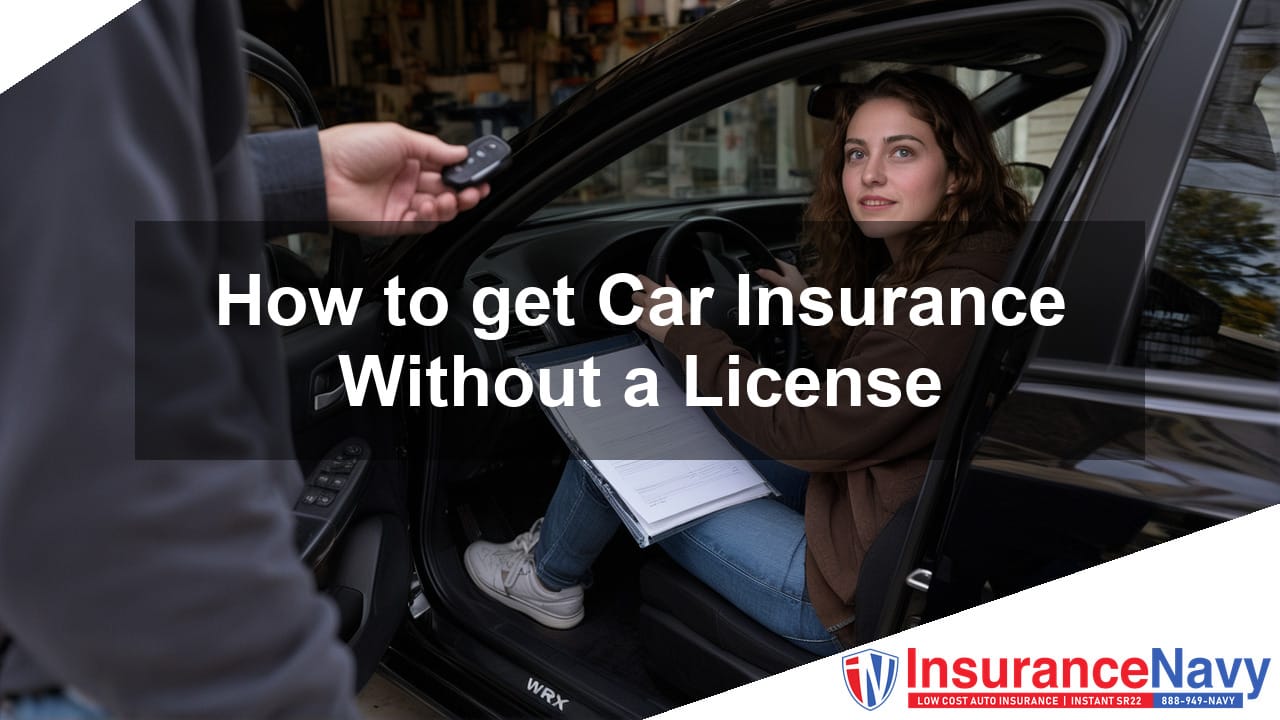
Car insurance without license coverage helps unlicensed vehicle owners meet state law. Many households include a family member who cannot legally drive a vehicle. This person may face age limits, a suspended license, or a disability. Insurance Navy helps every American find the right auto insurance policy. The right price matters for unlicensed owners who need compliant coverage. This guide covers everything unlicensed owners need to know. It explains documents, state requirements, designated drivers, and non-owner insurance. It also answers the most commonly asked questions owners face today. Every household situation differs, so requirements vary widely by state.
Table of contents
- Can you insure a car without a driver's license?
- What documents do you need for car insurance without a license?
- What are the requirements?
- Designating a Driver
- Excluded Drivers
- Registration Rules
- Unlicensed Household Members
- How much does car insurance cost without a license?
- Does car insurance without a license cover unlicensed drivers?
- What is named non-owner insurance and how does it relate to unlicensed drivers?
- How do you compare car insurance quotes without a license?
- Can you own a vehicle without a driver's license?
Can you insure a car without a driver's license?
You can insure a car without a driver's license in most states. Insurance companies usually require a licensed driver listed as primary. This primary driver operates the vehicle, even if the owner cannot. As stated by Compare.com, forty eight states mandate liability insurance. Only New Hampshire and Virginia skip this requirement entirely. License status does not matter under those two state laws. Texas law lets any resident purchase car insurance without a license. No statute blocks an unlicensed resident from buying a policy there. Most insurance companies still want a valid driver on file. The person driving the vehicle must carry a real license. Having a licensed household member get insurance solves this problem. This path remains the simplest way to get car insurance. Depending on the state, insurers may ask for extra proof of address. Getting insurance without a license takes patience but stays possible.
What documents do you need for car insurance without a license?
Unlicensed applicants need specific documents to get car insurance without a license. Insurance companies ask for proof of identity and vehicle details first. They also need the designated driver's information before binding a policy. As per Texas Insurance Code §1952.0545, insurers must disclose excluded drivers. Written disclosure protects both the insurer and the unlicensed owner. Paperwork matters as much as pricing in this process.
Required documents typically include the following items:
A valid government issued photo identification for the vehicle owner
Vehicle registration and the motor vehicle identification number
The designated primary driver's license number and driving history
Proof of home address and a Social Security or ITIN number
Prior insurance policy records, if any exist
Gathering these documents before quoting car insurance speeds up signing. Looking ahead, keeping related paperwork organized prevents delays later. A designated driver may change, so update records when needed.
What are the requirements?
The requirements for insuring a vehicle without a license vary by state. Every state except New Hampshire and Virginia requires financial responsibility proof. A standard liability insurance policy usually satisfies this requirement. According to the Insurance Research Council, 15.4% of drivers carried no insurance in 2023. Regulators use strict minimum coverage rules to close that gap. Eight states skip the SR-22 high-risk filing requirement entirely. Delaware, Kentucky, and New York fall into this group. Most other states require an SR-22 after a suspended license. Meeting the requirements means providing a valid license for one household driver. Owners also need current vehicle registration and proof of coverage limits. Some states accept a cash bond instead of a standard policy. This alternative remains available but costs more for most households. Key takeaways: households should designate a driver early in the process. Each application gets reviewed against state insurance coverage rules before binding.
| State | License Required to Buy Policy | High-Risk Filing Required |
|---|---|---|
| New Hampshire | No | No |
| Virginia | No | No |
| Texas | No | Varies by driving history |
| Delaware, Kentucky, New York | Yes (household driver) | Not required |
| Connecticut | No (household driver required) | Named driver exclusion applies |
Designating a Driver
Designating a driver lets an unlicensed owner insure a vehicle legally. Insurance companies require this designated primary driver to hold a valid license. The driver also needs an acceptable driving record before binding coverage. As reported by Connecticut's Office of Legislative Research, specific rules apply here. An unlicensed owner becomes the named insured under specific conditions. A licensed household member must become the designated driver first. The owner then signs a named driver exclusion form. Insurers price the policy using that driver's history, not the owner's. The owner will never legally operate the car under this policy. Family members often fill this role, like a spouse or adult child. Their driving record directly affects the household's insurance rates. Choosing the right person buying the coverage matters for fair pricing. This arrangement works well for roommates who already drive regularly.
Excluded Drivers
Excluded drivers are household members removed from coverage under the policy. Insurance companies use a named driver exclusion for these situations. This keeps a policy active despite an unlicensed license holder at home. A suspended or revoked license often triggers this exclusion. In the words of Colorado's statute §10-4-630, premiums cannot reflect that person's record. Excluded drivers' claim history does not raise the household's rate. Five states prohibit named driver exclusions entirely, including Kansas and Michigan. New York also bans this practice under state law. Insurers there must handle unlicensed household members differently.
Common reasons for exclusion include the following factors:
A suspended or revoked driver's license
A history of at-fault accidents or claims
Someone else in the home who simply does not drive
Excluding a driver usually lowers the household premium. The insurance company will still deny a claim from that excluded driver. This applies if the excluded person causes an accident while driving.
Registration Rules
Registration rules determine whether an unlicensed owner must insure a stored vehicle. Most states link vehicle registration directly to proof of insurance. A registered motor vehicle needs an active policy even when parked. As noted by California's DMV, Planned Non-Operation status changes this rule. A vehicle filed for this status skips registration fees and insurance mandates. It simply cannot be driven on any public road. Owners of a classic car often use similar filings elsewhere. A rarely driven vehicle can skip insurance costs legally this way. A parked car may still need coverage without this special status. Owners must maintain coverage continuously to avoid penalties at renewal. Registering a vehicle without proof of insurance risks a suspended registration. Fines and a later SR-22 requirement can follow that mistake.
| Registration Status | Insurance Required? |
|---|---|
| Actively registered and driven | Yes |
| Planned Non-Operation (California) | No |
| Stored, plates surrendered | No |
| Registered but rarely driven | Yes, often minimum coverage |
Unlicensed Household Members
Unlicensed household members affect how insurers rate and structure a policy. Every driver over legal age living at home needs a status. Insurers require each person to be listed or formally excluded. This rule exists because insurers assume access to the vehicle. As cited by Pew Research, one in ten adults rarely drive. Non-driving rates run higher among older adults and disabled people. Insurance companies handle unlicensed household members in a few common ways:
Listing them as an excluded driver with no coverage
Listing them at a minimal rating if they hold a permit
Requiring a signed statement confirming they will not operate the vehicle
Failing to disclose an unlicensed household member can void a claim. Full disclosure protects both the policy and the family's finances. Some states also review a household member's permit status yearly. Others simply trust the signed statement on file with the insurer.
How much does car insurance cost without a license?
Car insurance without a license typically costs more than a standard policy. Insurers view an unlicensed owner's household as a higher risk group. A designated driver carries the full weight of the driving record. In accordance with WalletHub, SR-22 insurance averages $1,204 per year. That figure sits well above the $1,061.54 national auto insurance average. Pricing climbs further when a household needs full coverage instead of liability only. A primary driver's suspended license history can also require an SR-22 filing. Costs vary by state and by garaging zip code as well. Insurance companies also weigh vehicle age and every listed driver's claim history. Two similar households can pay very different insurance rates based on these factors. Shopping multiple insurance companies before signing often uncovers real savings. A clean driving record for the primary driver also helps lower rates.
| Cost Factor | Average Annual Cost |
|---|---|
| Standard auto insurance (national average) | $1,061.54 |
| SR-22 filing added | $1,204 |
| Full coverage vs. liability-only | Full coverage costs more |
| Excluded-driver household | Often lower, but claim risk remains |
Does car insurance without a license cover unlicensed drivers?
Car insurance without a license does not cover an unlicensed driver behind the wheel. A policy protects the vehicle and the named insured's liability only. It excludes anyone barred from driving under a named driver exclusion. As indicated by Insurance.com, standard coverage assumes a valid license. Claims get denied when an excluded driver causes a crash. The policy still covers several other driving situations:
Damage caused by a licensed, listed driver operating the car
Comprehensive claims for theft, weather, or vandalism regardless of who drives
Liability protection when someone else with permission and a license borrows the car
Insurance without proper listing leaves the household's coverage exposed. Families should confirm exactly who counts as a covered driver. This step matters most before, not after, an accident happens. Named non-owner rules do not apply to this exact scenario.
What is named non-owner insurance and how does it relate to unlicensed drivers?
Named non-owner insurance is a liability policy for a licensed driver without a car. This product does not apply to unlicensed owners directly. It requires the applicant to hold a valid license while owning no vehicle. As referenced by Insurify, a non-owner car insurance policy averages $506 per year. Prices swing by state and by insurer across the country. This coverage helps a licensed driver who borrows vehicles often. It also helps someone who needs an SR-22 filing without owning a car. It satisfies insurance requirements between periods of vehicle ownership. Unlicensed individuals cannot buy this policy themselves under current rules. Understanding it still helps a household plan for the future. A suspended license can eventually get reinstated for a driver. Insurance Navy can help that household secure this coverage then. Non-owner policies typically exclude comprehensive and collision coverage entirely.
| Insurer or State | Average Non-Owner Premium |
|---|---|
| National average | $506/year |
| South Dakota (cheapest state) | $216/year |
| New Jersey (most expensive state) | $1,141/year |
| USAA (military members) | $207/year |
How do you compare car insurance quotes without a license?
You compare car insurance quotes without a license by shopping several insurers. Entering a zip code and vehicle details generates accurate insurance quotes. Each quote should reflect the household's designated driver information. As outlined by Compare.com, non-owner policy costs range widely by state. Prices run from roughly $200 to $1,400 per year nationally. Comparing coverage options matters more here than in typical searches. Shoppers who get auto insurance quotes from several companies often save the most. Reading customer reviews helps confirm which insurer treats excluded-driver households fairly.
Effective comparison shopping includes several key steps:
Requesting quotes from at least three insurance companies
Comparing minimum coverage and full coverage side by side
Asking each insurer directly about named driver exclusion rules
Reviewing customer reviews for claims service quality
Insurance Navy specializes in guiding customers without a license through this process. The process moves quickly once documents and driver details are ready.
Can you own a vehicle without a driver's license?
You can own a vehicle without a driver's license in every U.S. state. Ownership and licensing remain separate legal questions under state law. Insuring and registering that vehicle still requires meeting state rules. As stated by Federal Highway Administration data, vehicles outnumber licensed drivers. The count reached 284.6 million vehicles against 237.7 million drivers in 2023. That 47 million gap suggests many vehicles lack a licensed primary driver. Older adults and people with disabilities often fit this pattern. Family members who never learned to drive also keep vehicles registered. Someone else in the household then handles all the driving. State motor vehicle departments confirm ownership through title, not license. An owner without a license can still hold clear title to any car. Getting insurance without a license still means finding a willing licensed driver.
Car insurance without license situations are more common than most people realize. Insurance Navy helps every customer without a license find compliant coverage. Some households need a designated driver arrangement to stay protected. Others need an excluded driver setup or clear registration guidance. Insurance Navy's team reviews each case individually before recommending a policy. Insurance Navy specializes in matching unlicensed owners with willing insurance companies. Drivers and non-drivers alike stay protected under the right policy. Contact Insurance Navy today to get car insurance at the right price. Get the right coverage today, no matter who holds the license.