
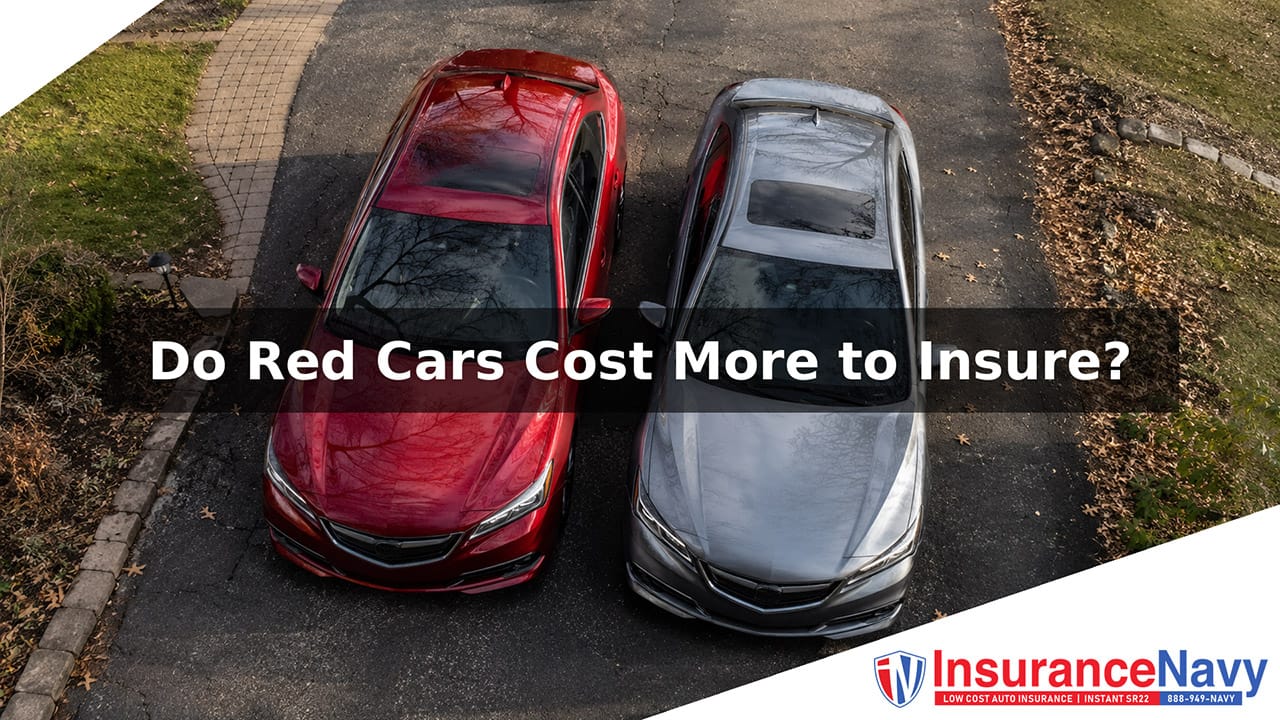
Red car insurance is a standard auto policy that costs the same as coverage for any other car color. Car insurance companies set premiums based on driver history, vehicle make and model, location, and annual mileage. Car color does not appear on most insurance applications. A custom or aftermarket paint job raises repair costs and can increase premiums. Full coverage car insurance costs an average of $2,697 per year in 2026, according to Bankrate. Drivers need rate factor and discount information to lower premiums. This guide explains the red car insurance myth, traffic stop statistics, rate factors, and premium discounts. Insurance Navy helps drivers compare quotes across the United States.
Table of contents
- Do Red Cars Increase Your Insurance Rates?
- Are Red Cars Pulled Over More Often? Myth Busted
- When Does Car Color Impact Insurance Rates?
- Does Car Color Affect Resale Value?
- Where Did The Red Car Myth Come From?
- Factors That Affect Your Car Insurance Rates
- Personal Factors That Affect Your Premium
- Vehicle Specific Factors That Affect Insurance Costs
- How to Lower Your Premium (Since Repainting Won't)
- 1. Increase Your Deductible
- 2. Review and Adjust Your Coverage
- 3. Take Advantage of Discounts
- 4. Consider Usage-Based or Pay-Per-Mile Insurance
- 5. Shop Around for Better Insurance Rates
- 6. Maintain Good Credit
- 7. Drive Less and Practice Safe Driving Habits
- Get More Affordable Red Car Insurance with Insurance Navy!
- Frequently Asked Questions
- Which Color Cars Are Cheaper to Insure?
- Which Car Colors Are Statistically Associated with Higher Accident Rates?
- Are Darker Cars More Prone to Accidents Due to Reduced Visibility?
- Do Car Insurance Applications Ask for Vehicle Color?
Red cars do not cost more to insure. According to the Insurance Information Institute, insurance companies set rates based on factors like the driver's history, vehicle make and model, location, and usage. Car color does not affect insurance premiums.
Do Red Cars Increase Your Insurance Rates?
No. Red cars do not increase your car insurance rates. Car insurance companies don't consider car color when calculating the price of auto insurance.
The belief is widespread anyway. Many drivers assume a red car means a higher premium.
When quoting your premium, most won't even ask about your car's color on the insurance application.
Instead, insurance companies look at key factors that make up your risk profile.
These are your car's make, model, and year, as these impact its value and repair costs.
The Vehicle Identification Number (VIN) determines the car's history and specs.
They also look at how many miles you drive annually and if the vehicle is used for commuting, as more time on the road means more accidents.
Beyond the car, personal factors play a big role in determining insurance premiums. Your driving record is one of the biggest factors, past traffic tickets and accidents help insurance companies predict your future behavior.
Location matters, too, as auto insurance companies look at ZIP codes to assess crime rates, theft, vandalism, and traffic congestion.
Depending on state laws, demographic factors like age, gender, and credit-based insurance scores may impact auto insurance rates.
While your car color doesn't affect your insurance premium, some customizations might.
If a red car is a high-performance model, a classic car, or has custom paint, it may need special coverage, which could increase the cost.
In those cases, insurance carriers might recommend a custom parts and equipment endorsement to cover the added value of the modifications.
Your car's specs, your driving record, and your location set the price. Car color never does.
Are Red Cars Pulled Over More Often? Myth Busted
No. Red cars are not pulled over more often. No data shows that police target vehicles by color. Police stop drivers for behavior and visible car problems.
Speeding, reckless driving, running a red light, or a broken taillight will get you pulled over far more often than the color of your car.
Interestingly, while red cars are thought to be the most ticketed, statistics show that white vehicles get the most tickets, and red cars are second.
Studies of traffic violation data have found that specific car models (luxury and economy) get pulled over more often than others. So, the vehicle type and the owner's driving habits matter more than color alone.
In the end, drivers should focus on safe driving practices rather than the color of their cars. Law enforcement is all about road safety, so if you drive safely and responsibly, you'll avoid traffic stops no matter your car color.
When Does Car Color Impact Insurance Rates?
Painting your car red won't affect your auto insurance rates, as insurers don't consider your vehicle's color when calculating premiums.
However, if your paint job is custom or aftermarket, insurance companies will classify it as a modification. This raises the repair or replacement cost of the vehicle and could have an impact on auto insurance rates. In this case, consider adding Custom Parts and Equipment (CPE) coverage to protect your investment.
CPE coverage is usually around $5,000 and covers aftermarket modifications including specialty paintwork.
While this type of coverage will increase your premiums, the cost is minimal. Standard factory colors, including red, don't require additional coverage and do not affect car insurance rates.
There is no evidence that car color affects the chances of getting pulled over. Still, studies have examined which colors are most stolen.
A 2012 study found that silver is the most stolen car color, while black, gold, green, and white vehicles are also frequent targets. Red cars weren't among the most stolen because they stand out more and are easier to identify.
So, if you're thinking of changing colors, the key thing to remember is whether it's a custom paint job. Red itself won't raise your auto insurance rates, but an aftermarket or specialty finish might require additional coverage.
Does Car Color Affect Resale Value?
Car color does not change your insurance premium. Car color can change the resale value of your car. iSeeCars analyzed over 2.1 million used 3-year-old cars and found an average 3-year depreciation of 33.1%. Red cars depreciate 32.7% over 3 years, near the average and close to white cars at 32.6%. Yellow cars depreciate least at 27.0%. Gold cars depreciate most at 37.1%. Resale value affects insurance only indirectly. A car with a lower resale value costs less to replace. A lower replacement cost can slightly lower comprehensive and collision premiums.
Where Did The Red Car Myth Come From?
The myth that red cars are more expensive to insure or get ticketed has no basis. The popular belief comes from common misconceptions about the color red and its association with speed, aggression, and sports cars.
Over the years, people have assumed red cars get more attention from the cops, so there are more traffic tickets and, consequently, higher auto insurance premiums.
The insurance industry doesn't consider the car's color when determining premiums. They look at the make and model of the vehicle, the driver's history, annual mileage, and location. Cops pull over drivers based on their behavior, not the color of their car.
The common belief that red cars stand out more or are inherently reckless has fueled this insurance myth for years, but it's a myth. Red may be a noticeable color, but it does not affect auto insurance or getting a ticket.
Factors That Affect Your Car Insurance Rates
While the color of your car does not impact car insurance costs, several other things do. Full coverage car insurance cost an average of $2,638 in 2025, according to Bankrate. The factors below determine where your premium falls against that average. Insurers look at personal factors and vehicle specifics to assess risk factors and your auto insurance price.
Personal Factors That Affect Your Premium
Driving Record: Safe drivers with no claims or tickets get lower rates. A clean record means lower risk for the insurance company. Claims or tickets mean higher risk.
Mileage: The more miles you drive yearly, the higher the risks of a car accident. Regular commuting to work, especially in heavy traffic areas, will give higher premiums.
Residence: Where you live affects your insurance rates. Populated cities with higher accidents, theft rates, and vandalism have higher premiums than rural or suburban areas. Parking your car in a garage instead of on the street can also lower costs.
Marital Status: Insurers see married drivers as less likely to get into accidents and drive safer. Being married almost always gives reduced insurance rates.
Age & Experience: Younger drivers, especially those under 25, are more likely to get into accidents. More experienced drivers pay less than younger drivers.
Gender: In some regions, insurers consider gender when pricing insurance rates. Historical data shows that men are more likely to get into accidents than women.
Credit History: Many insurers use credit scores to predict a driver's risk. A higher credit score means lower premiums and a lower score means higher rates.
Insurance Claims History: If you have a history of claims, insurers may consider you a higher-risk driver. As a high risk driver, you'll get charged higher insurance premiums.
Vehicle Specific Factors That Affect Insurance Costs
Type of Vehicle, Make, and Model: Insurers assess a vehicle's make, model, and year to determine its value, repair costs, and safety record. Expensive or high performance cars cost more to insure because they cost more to repair or replace.
Engine Size & Horsepower: Insurers charge higher premiums for larger engines and high-horsepower trims. A stronger engine reaches higher speeds and produces costlier claims. Two versions of the same model can carry different premiums based on engine size alone.
Vehicle Age: Newer cars have higher premiums because they are more expensive to replace and repair. Older cars tend to have cheaper rates due to being less expensive to replace.
Size and Design: Larger vehicles like SUVs and trucks may have higher premiums as they can cause more damage in an accident. They may offer better crash protection and lower medical bills after an accident.
Trim Level & Luxury Features: Upgraded trim levels with premium interiors, sunroofs, or advanced tech can increase auto insurance costs. These features increase repair and replacement costs.
Body Style: Sport cars, convertibles, and coupes have higher premiums than sedans or minivans. Statistically they are more likely to get into an accident.
Safety Features: Cars with advanced safety features like collision detection systems, anti-lock brakes, and airbags may lower your rates with safety discounts.
Repair & Replacement Costs: Cars that require special parts, such as imported or luxury cars, have higher repair costs. Higher repair costs will almost always increase insurance rates.