
Taxi Insurance: Costs, Factors, Premiums, Coverage, Liability limits
Professional drivers need taxi insurance to protect themselves, their passengers, and their income. The US taxi market hit $82.65 billion in 2024 and keeps growing. About 393,400 taxi, shuttle, and chauffeur drivers were working across the US as of 2024. Every one of them needs commercial auto coverage built for for-hire driving. A personal auto policy will not cover you once you start charging passengers. Knowing what taxi insurance costs, what it covers, and what the law requires helps you choose wisely. Insurance Navy helps people get the right insurance at the right price, matching drivers to the right policy, the right protection, and the right commercial insurance company for their needs.
How much does Taxi Insurance cost per month?
Monthly taxi insurance costs run from about $560 in low-risk states to more than $1,200 in high-risk states. Cities like New York push premiums much higher than rural areas, according to Radicalstart (Feb. 2026). In 2024, a single NYC taxi driver could expect to pay between $4,000 and $5,500 per year, based on data from the University Transportation Research Center.
| City/Region | Monthly Premium Range | Risk Level |
|---|---|---|
| New York City | $1,200+ | High |
| Chicago / Los Angeles | $900,$1,100 | High |
| Suburban markets | $700,$900 | Medium |
| Rural/low-risk states | $560,$700 | Low |
Get an insurance quote today to check your specific cost based on location and vehicle type.
What liability limits do taxi drivers legally need?
Taxi drivers must carry higher liability limits than regular drivers. NYC TLC rules, for example, require taxis and for-hire vehicles to carry $200,000 in no-fault coverage per person. That is four times the state minimum. The exact numbers change by state, but every commercial taxi driver must meet the minimum set by local transportation authorities.
Minimum requirements typically include:
Bodily injury liability: Pays for injuries to other drivers and people on foot.
Property damage liability: Covers damage your taxi does to other vehicles or structures.
No-fault/PIP coverage: Pays medical costs no matter who caused the crash.
Uninsured motorist coverage: Protects you when the other driver has no insurance at all.
Some of these coverage types must be in place before you can legally drive for hire. Visit the Insurance Navy website and contact a licensed insurance company to make sure you meet the rules in your area.
How does taxi insurance differ from personal auto insurance?
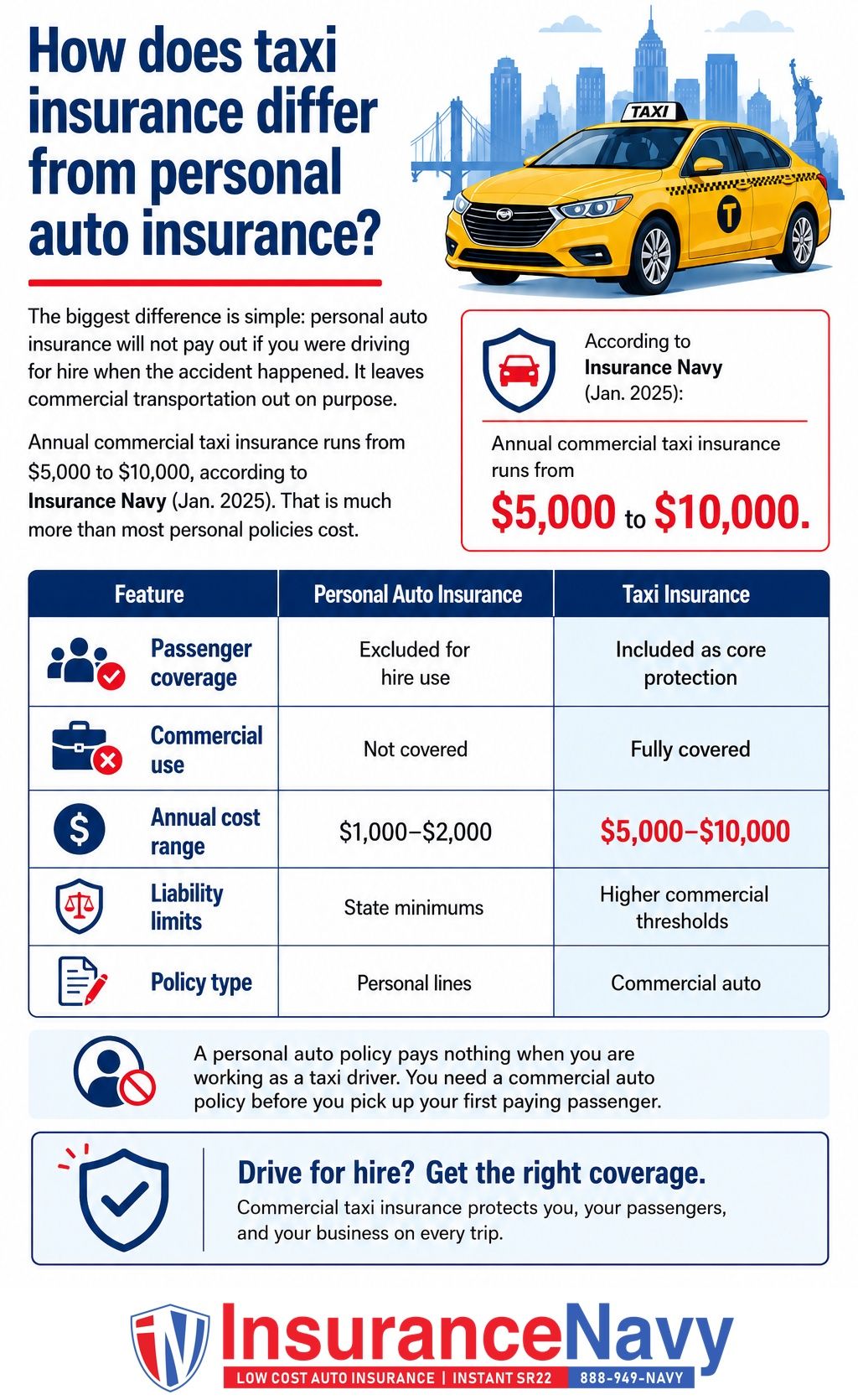
The biggest difference is simple: personal auto insurance will not pay out if you were driving for hire when the accident happened. It leaves commercial transportation out on purpose. Annual commercial taxi insurance runs from $5,000 to $10,000, according to Insurance Navy (Jan. 2025). That is much more than most personal policies cost.
| Feature | Personal Auto Insurance | Taxi Insurance |
|---|---|---|
| Passenger coverage | Excluded for hire use | Included as core protection |
| Commercial use | Not covered | Fully covered |
| Annual cost range | $1,000,$2,000 | $5,000,$10,000 |
| Liability limits | State minimums | Higher commercial thresholds |
| Policy type | Personal lines | Commercial auto |
A personal auto policy pays nothing when you are working as a taxi driver. You need a commercial auto policy before you pick up your first paying passenger.
Does Taxi Insurance cover passenger injuries?
Yes. Passenger injuries are covered through passenger liability and personal injury protection. The NYC TLC requires for-hire vehicles to carry higher no-fault limits than regular cars because every trip puts passengers at some risk. In New York in 2023, suspected no-fault fraud made up 75% of all insurance fraud reports, according to the NY Department of Financial Services.
Passenger injury coverage typically includes:
Medical payments coverage: Takes care of immediate medical bills right after a crash.
Personal injury protection (PIP): Covers lost wages and rehab costs for those who are hurt.
Passenger liability coverage: Protects the driver if a passenger decides to sue.
Uninsured motorist coverage: Keeps passengers covered when another driver has no insurance.
Any taxi insurance policy worth having must include solid passenger protection to meet commercial transportation rules.
What coverage types does Taxi Insurance include?
Taxi insurance covers every major risk a driver faces on the job. The kind of vehicle you drive and the service you provide change which coverage types matter most, according to MoneyGeek (Mar. 2026). Before you drive for hire, switching your vehicle to a commercial policy is not optional.
Essential coverage types include:
Commercial liability insurance: Pays out when someone else gets hurt or their property gets damaged because of you.
Collision insurance: Fixes your taxi after a crash where you are at fault.
Comprehensive insurance: Covers theft, vandalism, bad weather, and fire.
Medical payments/PIP: Pays medical bills for you and your passengers after an accident.
Uninsured/underinsured motorist: Steps in when the other driver does not have enough insurance to cover the damage.
Gap insurance: Covers the gap between what your vehicle is worth and what you still owe on it.
Sitting down with a licensed insurance company and going through each coverage type helps you build a policy that fits your business.
How does Taxi Insurance handle fleet coverage?
Fleet coverage puts all your vehicles under one commercial auto policy instead of managing a separate plan for each one. The US taxi and limousine services market was valued at $75.4 billion in 2026, according to IBISWorld, and many of those operators run fleets. Bundling vehicles into one policy usually lowers the cost per vehicle and cuts down on paperwork.
| Fleet Size | Coverage Approach | Potential Savings |
|---|---|---|
| 1,5 vehicles | Individual commercial policies | Standard rates apply |
| 6,15 vehicles | Small fleet policy | 10%,15% per vehicle |
| 16,50 vehicles | Mid-market fleet program | 15%,25% per vehicle |
| 50+ vehicles | Large commercial fleet program | Custom pricing available |
Fleet operators should contact a commercial insurance company to learn more about bundled policy options. One fleet policy means less hassle and the same level of protection across every vehicle you run.
Protect Your Taxi Business With the Right Insurance Today
Every for-hire driver and fleet owner needs taxi insurance. A personal auto policy will not step in for commercial taxi work. Only a commercial auto policy gives you real protection. The US taxi market keeps growing, and so do the rules that come with it.
Getting started is straightforward. Follow these steps to secure coverage quickly:
Go to the Insurance Navy website and find the quote request form.
Type your driver information into the fields provided.
Enter the script ID number tied to your vehicle registration if you have one.
Submit your details and get a personalized insurance quote right away.
Look over your privacy rights and how your information will be shared before you finish.
Coverage keeps your passengers safe, your vehicle protected, and your income secure. Get a quote from Insurance Navy today and get the coverage your taxi business deserves.