Owner Operator Insurance for Trucks: What does it mean, Types of Coverage, Costs, Deductibles
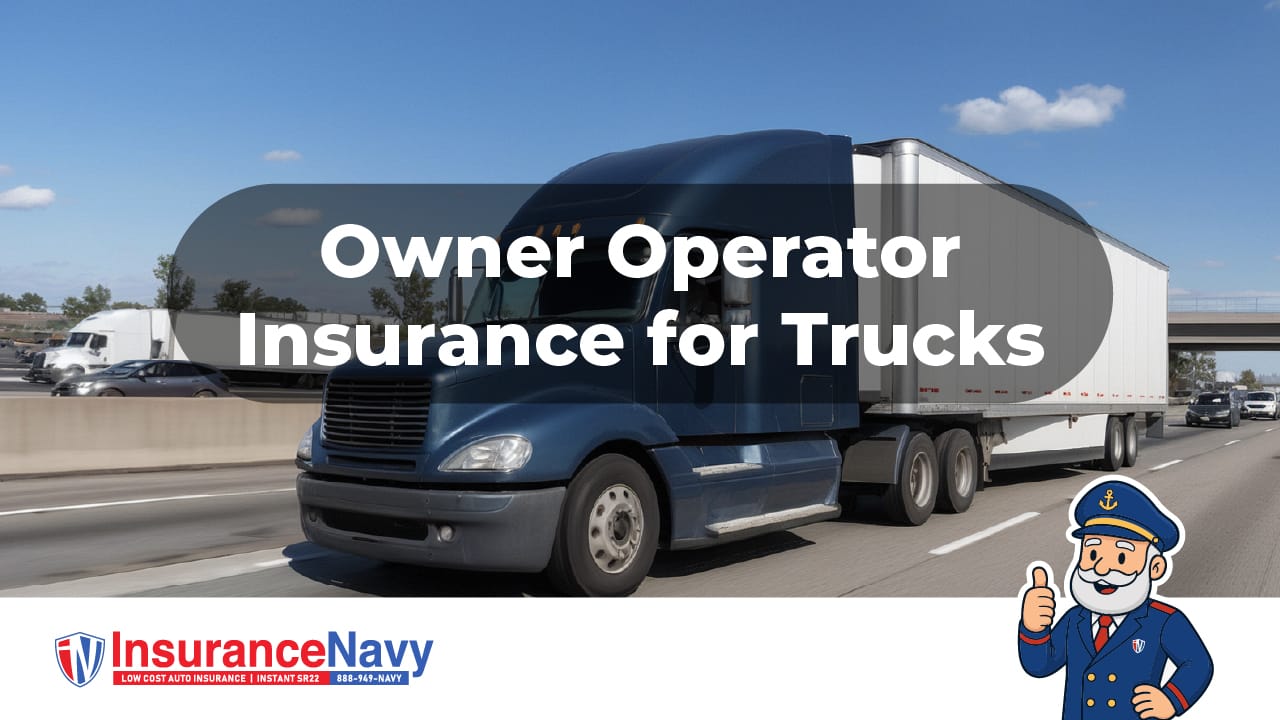
Owner operator insurance for trucks protects independent truckers from financial ruin. Every commercial truck driver running their own business faces serious risks daily. The right insurance coverage separates thriving operators from bankrupt ones. American truck owners need protection for their vehicles, cargo, and liability exposure. This guide answers every critical question about owner operator insurance. It covers costs, coverages, and requirements. Insurance Navy's experienced team helps truckers find the right insurance for the right price. Understanding your options helps you protect your trucking business and keep operating legally under FMCSA regulations.


What is Owner Operator Insurance for Trucking?
Owner operator insurance for trucking is a specialized commercial trucking insurance policy designed for independent truck drivers. It differs from standard personal auto insurance. Truckers need commercial truck insurance because personal policies exclude business operations entirely. An owner operator insurance policy can provide peace of mind across a wide range of hauling situations.
Here are the core protections a commercial trucking insurance policy can include:
Primary liability insurance covering third-party bodily injury property damage
Physical damage coverage protecting trucks tractors and other equipment
Motor truck cargo insurance covering freight in transit
Occupational accident coverage replacing workers' compensation benefits
Per AtoB research, independent authority operators pay $9,000–$17,000 annually. Leased operators pay significantly less at $3,000–$5,000 per year.
What Types of Coverage Does Owner Operator Truck Insurance Include?
Owner operator truck insurance includes multiple coverage types that protect drivers, vehicles, cargo, and trucking operations comprehensively. Each coverage type addresses a specific risk truckers face on the road. Operators can choose their operator insurance coverage based on business type and authority status.
Standard coverages include:
Primary auto liability insurance, required for all carriers
Physical damage, covers collision and comprehensive losses
Motor truck cargo insurance, protects freight hauling services
Truck general liability insurance, covers non-driving business incidents
Trailer interchange, protects a trailer not owned by the operator
Occupational accident insurance, provides injury and accidental death benefits
Rental reimbursement, covers downtime costs during repairs
Motor truck general liability and cargo coverage round out a comprehensive operator insurance policy. As noted by TruckSmarter, bundling liability, cargo, and physical damage with one policy saves 10–20% on total premiums.
How Much Does Owner Operator Insurance for Trucks Cost?
Owner operator insurance cost ranges from $9,000 to $17,000 annually for operators running their own authority. Leased operators pay considerably less, ranging from $3,000 to $5,000 per year. Insurance costs represent the fourth-largest expense in any trucking business. Truckers can get a free quote to find a better rate from carriers offering a range of products.
| Operator Type | Monthly Cost | Annual Cost |
|---|---|---|
| Independent Authority | $900–$1,800/month | $9,000–$17,000 |
| Leased Operator | $250–$500/month | $3,000–$5,000 |
| New Authority (Under 12 Months) | Up to $2,500+/month | $25,000+ possible |
| Established (3+ Years Clean) | $750–$1,200/month | $8,000–$14,000 |
Per TruckingWay, sourcing ATRI and OOIDA Foundation data, insurance averages $13,500 per year on $155,000 gross revenue. Operators net only 14.5%–17.8% of gross after all expenses. Getting a free quote from an experienced team helps operators minimize costs.
What Are the Deductibles for Owner Operator Insurance for Trucking?
Deductibles for owner operator insurance for trucking typically range from $1,000 to $5,000 for physical damage coverage. Higher deductibles lower monthly premiums but increase out-of-pocket costs after an accident. Operators must choose deductible levels that match their cash reserves. In the event of a covered loss, the deductible applies before the policy pays out.
Common deductible structures include:
$1,000 deductible, higher premium, lower financial risk per claim
$2,500 deductible, balanced approach for most operators
$5,000 deductible, lowest premium, requires strong cash reserves
Cargo insurance deductible, typically $1,000–$2,500 per covered loss
Primary liability deductible, often $0 for third-party claims
As indicated by FreightWaves Checkpoint, physical damage coverage costs 3–6% of the truck's stated value annually. On a $120,000 tractor, that equals $3,600–$7,200 per year before deductible adjustments.
What is Primary Auto Liability in Owner Operator Truck Insurance?
Primary auto liability insurance covers bodily injury property damage caused to a third party during commercial transportation operations. The Federal Motor Carrier Safety Administration (FMCSA) requires this coverage for all motor carriers. Auto liability insurance forms the financial foundation of every commercial trucking insurance policy. Operators must file FMCSA filings to prove coverage before hauling freight legally.
| Coverage Component | Minimum Requirement | Recommended Limit |
|---|---|---|
| Bodily Injury per Person | $300,000 | $1,000,000 |
| Bodily Injury per Accident | $300,000 | $1,000,000 |
| Property Damage | $300,000 | $1,000,000 |
| Combined Single Limit | $750,000 (FMCSA) | $1,000,000+ |
As reported by Truck Writers Research, primary auto liability accounts for 55–70% of total monthly insurance spend. Independent operators pay $417–$833+ per month for this coverage alone. Truckers must meet federal motor carrier safety administration FMCSA requirements before operating legally.
What Does Physical Damage Coverage Protect for Owner Operators?
Physical damage coverage protects owner operators by paying repair or replacement costs after covered losses. This coverage helps operators avoid devastating out-of-pocket repair bills. Without it, a single accident could end an owner operator's entire business. Operators are hauling expensive equipment and need at least basic physical damage protection at all times.
| Covered Event | Physical Damage Response | Notes |
|---|---|---|
| Collision Accident | Pays repair or replacement | Subject to deductible |
| Theft | Replaces insured vehicle | Requires comprehensive |
| Vandalism | Covers repair costs | Part of comprehensive |
| Fire Damage | Pays repair or replacement | Comprehensive coverage |
| Weather Damage | Covers hail, flood, wind | Comprehensive coverage |
As per FreightWaves Checkpoint, physical damage insurance costs 3–6% of the truck's stated value per year. On a $120,000 tractor, operators pay roughly $3,600–$7,200 annually. Operators running newer trucks should prioritize comprehensive physical damage protection.
How Does Leased Operator Status Affect Truck Insurance Rates?
Leased operator status significantly lowers truck insurance rates compared to running independent authority. A permanent lease arrangement shifts primary liability responsibility to the motor carrier. Leased operators gain access to the carrier's insurance program at deeply discounted group rates. Operators may have specific trucking needs that a variety of optional coverages can help address.
Leased vs. independent operator insurance differences:
Leased operators pay $250–$500/month versus $900–$1,800/month independently
Motor carrier covers primary auto liability under their policy
Leased operators still need non-trucking liability and physical damage while driving off-duty
Trailer interchange coverage becomes relevant for leased drivers hauling a trailer
Occupational accident coverage costs $1,600–$2,200/year for leased operators
As noted by Truck Writers, new operators under a permanent lease access coverage at dramatically lower rates. Independent authority operators assume all insurance costs and risks personally. Many new truckers choose to lease before obtaining their own authority.
What is Motor Truck Cargo Insurance for Owner Operators?
Motor truck cargo insurance for owner operators covers freight and goods during transportation. Shippers and brokers often require carriers to carry this coverage before awarding loads. This type of insurance protects owner operators from financial liability when cargo is lost, stolen, or damaged. Operators may have specific cargo insurance needs based on things like freight value and haul type.
| Cargo Situation | Coverage Response | Typical Limit |
|---|---|---|
| Fire During Transit | Pays cargo value | Up to $100,000 |
| Theft of Freight | Replaces cargo value | Up to $100,000 |
| Accident Damage | Covers damaged goods | Up to $100,000 |
| Loading/Unloading Damage | May be covered | Policy-specific |
As reported by DriverAdvantage, motor truck cargo insurance costs $500–$1,800 annually for the industry-standard $100,000 coverage limit. That equals roughly $129 per month for reliable freight protection. Operators hauling high-value freight should purchase additional cargo insurance beyond standard limits.
Why Choose a Risk Retention Group for Trucking Insurance?
A risk retention group offers owner operators an alternative to standard commercial insurers. These groups provide business insurance through a member-owned structure that can lower premiums. Risk retention group options can be a lot more flexible than traditional carriers for operators with unique risk profiles.
Here are key benefits a risk retention group can provide:
Lower premiums through collective risk management
Member-owned structure aligns interests with truckers
Can offer a variety of commercial auto products including cargo and liability
May have specific underwriting flexibility for specialized trucking operations
Can help prevent coverage gaps for operators with complex needs
Operators should find a licensed risk retention group providing detailed information about their coverage terms. An experienced team can help operators evaluate whether this business type structure makes sense. Why choose a risk retention group? It can be a better fit for operators who need accident coverage and bodily injury property damage protection at competitive rates.
Do I Need Additional Coverages for My Trucking Business?
Do I need additional coverages beyond primary liability? Most operators do. Truckers can file a claim under optional coverages including general liability, occupational accident, and trailer interchange. A third party injured in a non-driving incident may have a claim against the operator's business insurance.
Here are optional coverages truckers need to consider:
Occupational accident insurance, covers injuries while driving or loading
Non-trucking liability, covers truck for personal use off-duty
General liability, covers advertising injury and third-party property damage at a job site
Trailer interchange, covers a trailer not owned by the operator while hauling
Operators can choose from a range of optional add-ons that round out their operator insurance policy. Insurance can help operators meet contractual requirements from brokers and shippers. Our experienced team at Insurance Navy offers a variety of products and can help operators find the right coverage at the right price.
How Do Nuclear Verdicts Impact Owner Operator Insurance Pricing?
Nuclear verdicts directly impact owner operator insurance pricing by forcing insurers to raise premiums across the entire trucking industry. These massive jury awards create catastrophic losses that insurers pass on to all commercial truck drivers. Every owner operator pays more because of litigation trends targeting the trucking industry. A third party filing a lawsuit can trigger a claim that exposes operators to enormous liability under current law.
Nuclear verdict statistics driving insurance costs:
135 nuclear verdicts occurred in 2024, totaling $31.3 billion
Median award reached $51 million in 2024
Verdicts against trucking firms rose 967% from 2010 to 2023
Thermonuclear verdicts exceeding $100 million jumped 81% in 2024
Non-medical damages exceeded medical bills by 10x