
Bobtail Insurance: Importance, Costs, Coverage, Limits
For owner-operators and independent truckers, protection on the road doesn't end when a delivery does. Bobtail insurance fills a critical gap in trucking coverage by protecting drivers who operate their truck without a trailer and outside of a carrier's dispatch - exactly when a motor carrier's primary liability policy stops applying. Affordable at $350 to $600 per year and fully tax-deductible, policies typically carry limits between $1,000,000 and $2,000,000, covering bodily injury, property damage, and legal defense costs. Without it, a single accident can expose a driver to average costs exceeding $148,000. This article breaks down what bobtail insurance covers, what it costs, and how drivers can find the right policy to meet their lease requirements.



What is Bobtail Insurance?
Bobtail insurance, also called non-trucking liability insurance, covers a truck driver when they drive without a trailer. This happens when a driver finishes a delivery and drives home alone. The truck has no load attached during this time. It fills a gap in regular trucking coverage. It protects drivers who are not working under a carrier's orders.
Covers the truck when no trailer is attached
Applies when the driver is off dispatch
Does not cover cargo or personal use
Is separate from the motor carrier's main policy
Protects the driver from liability costs after an accident
According to Investopedia, the US trucking industry earns over $900 billion each year. This large industry creates a big need for specialty insurance products. Bobtail insurance serves a key role in this market.
Why is Bobtail Insurance so important to owner operators?
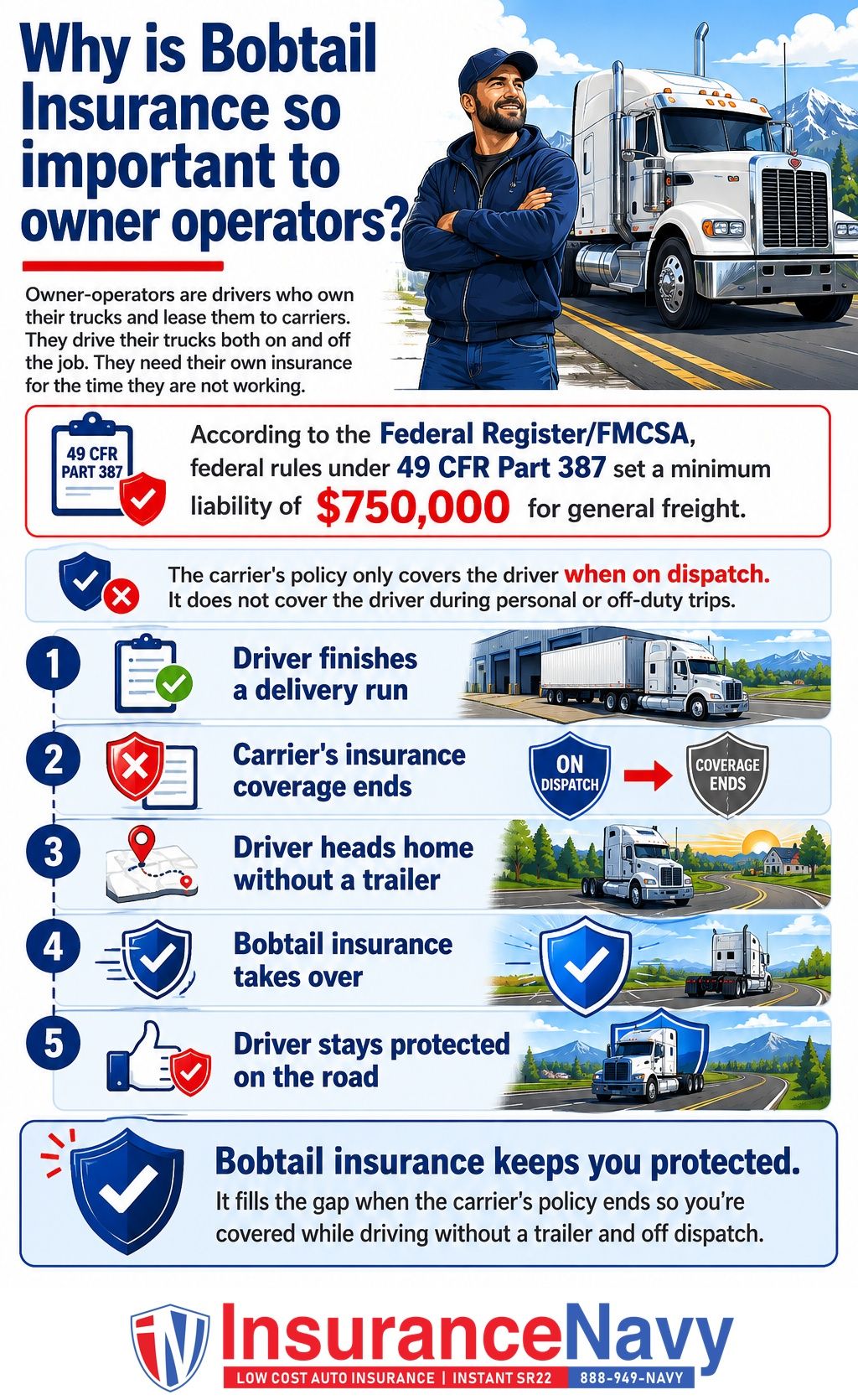
Owner-operators are drivers who own their trucks and lease them to carriers. They drive their trucks both on and off the job. They need their own insurance for the time they are not working.
According to the Federal Register/FMCSA, federal rules under 49 CFR Part 387 set a minimum liability of $750,000 for general freight. The carrier's policy only covers the driver when on dispatch. It does not cover the driver during personal or off-duty trips.
Driver finishes a delivery run
Carrier's insurance coverage ends
Driver heads home without a trailer
Bobtail insurance takes over
Driver stays protected on the road
What Are the Costs of Bobtail Insurance?
Bobtail insurance typically costs between $350 and $600 per year. That breaks down to roughly $35 to $50 per month per truck. This makes it one of the most affordable trucking insurance products available. Bobtail insurance premiums are lower than most other trucking policies. The cost stays affordable because the risk is smaller off dispatch. Drivers are not hauling heavy loads during this time
What factors affect Bobtail Insurance costs?
Here are the factors that affect Bobtail insurance:
Driving record affects your premium price
Older trucks may cost more to insure
Your state can change your rate
Years of experience lower your cost
A clean safety record earns discounts
According to Investopedia, premiums paid for bobtail insurance are fully tax-deductible under IRC Section 162. Owner-operators can deduct this cost as a normal business expense. This reduces the total out-of-pocket cost even further.
What Does Bobtail Insurance Include?
Bobtail insurance pays for damage you cause to other people or their property. It covers accidents that happen when you drive without a trailer. It only applies when you are not under a carrier's dispatch. Property damage liability means coverage for objects or vehicles you damage. Bobtail insurance includes the following:
Bodily injury to other drivers or pedestrians
Damage to other vehicles in a crash
Damage to buildings, fences, or other property
Legal defense costs if you are sued
Medical payments to injured third parties
As stated by Investopedia, bobtail insurance does not cover physical damage to your own truck. It also does not cover cargo or personal use of the vehicle. Drivers must buy separate policies for those needs.
What Are the Typical Policy Coverage Limits Available for Bobtail Insurance?
Coverage limits define the maximum amount an insurer will pay after a claim. Higher limits offer more protection. They also cost a bit more each month.
As reported by Investopedia, bobtail policies typically carry limits between $1,000,000 and $2,000,000 per occurrence. These limits match what most carrier lease agreements require. Drivers should check their lease to confirm the minimum needed.
| Coverage Limit | Monthly Cost Range | Best For |
|---|---|---|
| $500,000 | Low | Minimal lease requirements |
| $1,000,000 | Moderate | Most standard leases |
| $2,000,000 | Higher | High-risk routes or carriers |
How Does Bobtail Insurance Differ From Primary Liability and Occupational Accident Coverage?
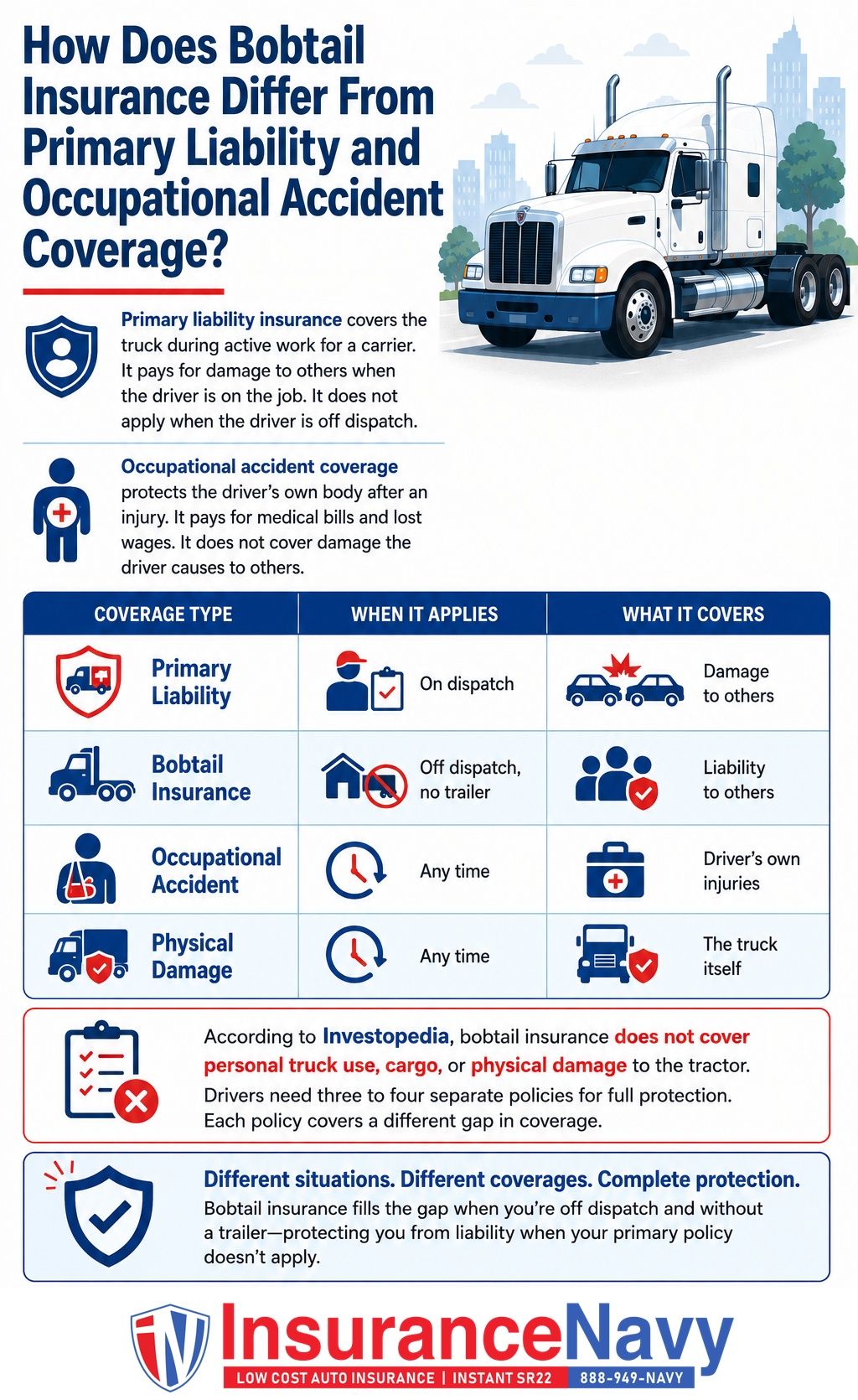
Primary liability insurance covers the truck during active work for a carrier. It pays for damage to others when the driver is on the job. It does not apply when the driver is off dispatch.
Occupational accident coverage protects the driver's own body after an injury. It pays for medical bills and lost wages. It does not cover damage the driver causes to others.
| Coverage Type | When It Applies | What It Covers |
|---|---|---|
| Primary Liability | On dispatch | Damage to others |
| Bobtail Insurance | Off dispatch, no trailer | Liability to others |
| Occupational Accident | Any time | Driver's own injuries |
| Physical Damage | Any time | The truck itself |
According to Investopedia, bobtail insurance does not cover personal truck use, cargo, or physical damage to the tractor. Drivers need three to four separate policies for full protection. Each policy covers a different gap in coverage.
What Are the Effects of Operating Without Bobtail Insurance on a Truck Driver's Financial Liability?
Driving without bobtail insurance exposes a driver to serious money risk. One accident without coverage can cause lasting financial harm. The driver must pay all costs out of pocket.
As stated by the Federal Reserve Economic Data, large trucking accidents cost an average of $148,000 per crash. That figure covers direct costs only. Legal fees and medical bills can push the total much higher.
| Risk Without Coverage | Possible Cost |
|---|---|
| Vehicle damage to others | $10,000–$50,000+ |
| Bodily injury claims | $50,000–$500,000+ |
| Legal defense fees | $5,000–$30,000+ |
| Lost wages during lawsuit | Varies |
| Total crash exposure | $148,000+ average |
How Does Bobtail Insurance Affect an Owner-Operator's Leasing Agreement With a Motor Carrier?
A leasing agreement is a contract between a driver and a motor carrier. It sets the rules for how the driver uses the carrier's authority. Most of these contracts require the driver to carry bobtail insurance.
According to the Federal Register/FMCSA, FMCSA leasing rules under 49 CFR 376 require owner-operators to carry their own liability coverage outside the carrier's authority. Carriers protect themselves by writing this into the lease. Drivers who skip this coverage can lose their lease.
Driver signs a lease agreement with a motor carrier
The contract lists required insurance policies
Driver buys bobtail insurance to meet the terms
Driver sends proof of coverage to the carrier
Carrier keeps a copy on file for compliance
How Effective is Bobtail Insurance at Protecting Drivers During Non-Dispatch Trips?
Bobtail insurance works well when drivers face liability claims off dispatch. It steps in exactly when the carrier's policy stops. This protection covers the most common gap in trucker coverage.
As stated by to the Federal Register/FMCSA, fatigue-related crashes make up about 13% of large-truck accidents. Many of these happen when drivers travel to or from a dispatch location. Bobtail insurance covers this high-risk travel time.
How to Find and Compare Affordable Bobtail Insurance Quotes From US Providers?
Finding the right bobtail insurance takes a few simple steps. Drivers should compare quotes from multiple insurers. The best policy balances low cost with strong coverage limits.
The global commercial trucking insurance market was valued at about $50 billion in 2022. The US holds the largest share of this market. Many insurers compete for owner-operator business, which keeps prices competitive.
Gather your truck details, driving record, and lease agreement
Contact at least three specialty commercial insurers
Ask each insurer for a quote with $1,000,000 in coverage
Compare the premiums, limits, and exclusions side by side
Choose the policy that meets your lease requirements
Buy the policy and send proof to your motor carrier
As per the OECD, state-based insurance rules create different prices and terms across all 50 states. Drivers should check their state's rules before buying. A local broker can help drivers find the best rate in their area.
Ask about multi-policy discounts with your other trucking policies
Check the insurer's financial strength rating before you buy
Read the exclusions section carefully
Confirm the policy covers your exact driving routes
Review your policy every year as your lease terms change
Insurance Navy helps US owner-operators find affordable bobtail insurance quotes fast. Visit Insurance Navy to compare rates from top commercial trucking insurers in your state.