
Food truck insurance: Types, Costs, Coverage, Quotes, 2026
Food truck businesses face unique risks every day on the road. According to FLIP's 2026 Food & Beverage Industry Trends Report, insurance claims among food and beverage operators rose 32.7% year over year in 2025. The right food truck business insurance policy protects your business from financial devastation. Finding the right insurance at the right price matters more than ever. This guide covers every essential coverage type, real cost benchmarks, and key factors that determine your premium. Whether you operate trucks lunch, trucks catering, or trucks ice cream, Insurance Navy helps food truck owners get the right truck insurance policies today.



What is food truck insurance?
Food truck insurance is a type of insurance designed for mobile food business owners. It protects them from financial losses caused by accidents, property damage, lawsuits, and injuries. Insurance food truck policies include multiple coverage types bundled into one comprehensive plan.
Food trucks are a growing segment of the small business insurance market. Per IBISWorld's 2025 industry report, there are 92,257 food truck businesses operating across the United States today. These mobile food operations require specialized protection across vehicles, kitchen equipment, and customer interactions.
A food truck insurance policy can cover key risks including:
Bodily injuries to customers or employees who are injured
Property damage caused by your truck or business operations
Accidents involving your commercial vehicle
Food spoilage and accidents equipment breakdown
Fire damage from cooking equipment or propane
Theft vandalism of your truck or equipment
What types of coverage does food truck insurance include?
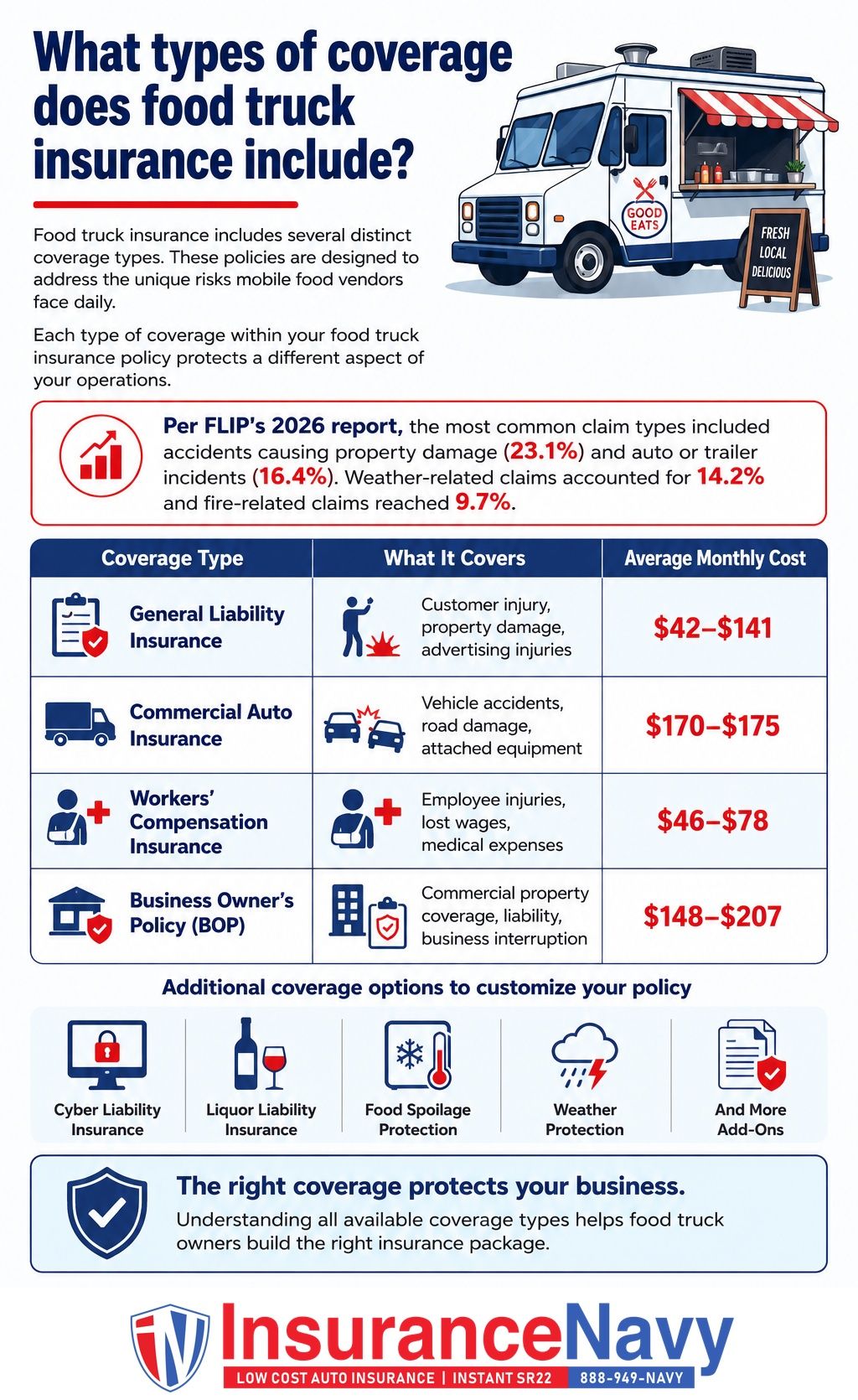
Food truck insurance includes several distinct coverage types. These policies are designed to address the unique risks mobile food vendors face daily. Each type of coverage within your food truck insurance policy protects a different aspect of your operations.
Per FLIP's 2026 report, the most common claim types included accidents causing property damage (23.1%) and auto or trailer incidents (16.4%). Weather-related claims accounted for 14.2% and fire-related claims reached 9.7%. Understanding all available coverage types helps food truck owners build the right insurance package.
| Coverage Type | What It Covers | Average Monthly Cost |
|---|---|---|
| General Liability Insurance | Customer injury, property damage, advertising injuries | $42–$141 |
| Commercial Auto Insurance | Vehicle accidents, road damage, attached equipment | $170–$175 |
| Workers' Compensation Insurance | Employee injuries, lost wages, medical expenses | $46–$78 |
| Business Owner's Policy (BOP) | Commercial property coverage, liability, business interruption | $148–$207 |
Food truck insurance can cover a wide range of risks beyond these core categories. Operators can customize a policy to include cyber liability, liquor liability insurance, and food spoilage protection. Insurance companies offer these add-ons so you can choose the right fit for your business.
How much does food truck insurance cost per month?
The cost of food truck insurance varies widely depending on your selected coverage types. According to Insureon, the average month general liability premium costs $42 with $1 million per occurrence limits. A full recommended bundle including a BOP, workers' comp, and professional liability averages $312 per month, per MoneyGeek.
Per Insuranceopedia, annual food truck insurance premiums commonly range from $516 to $6,000 annually depending on several key factors. Insurance.com reports that a comprehensive commercial food truck policy costs $1,500 to $4,000 per year. These figures help food truck businesses budget accurately for protection.
Individual policy costs at a glance:
General liability insurance: $42–$141 per month
Commercial auto insurance: $170–$175 per month
Workers' compensation insurance: $46–$78 per month
Policy BOP (Business Owner's Policy): $148–$207 per month
Professional liability insurance: $59 per month
Full recommended bundle: approximately $312 per month
You can save money by bundling coverage types into a single policy. An insurance expert can help you find quotes from multiple insurance companies. Fill out a short form online to get an insurance quote and compare options fast.
What coverage types does food truck insurance typically include?
Food truck insurance typically includes general liability, commercial auto, and workers' compensation insurance. These core coverage types provide essential financial protection for your food truck business. Most insurance companies also offer add-on coverages like cyber liability and property insurance.
As noted by FLIP, the average general liability insurance claim cost $6,438 in 2025. The average food truck equipment claim cost $2,558 that same year. These figures confirm why comprehensive coverage types matter for every food truck owner.
A commercial auto policy covers your vehicle and the assets permanently attached to it. A commercial car insurance policy differs from a standard car insurance plan. Like commercial property coverage, a commercial auto policy protects business property while your truck is on the road.
Essential coverage types your food truck insurance policy should include:
General liability protection: Protects against bodily injury and property damage claims
Commercial auto coverage: Covers your vehicle, including vehicles used for food delivery
Workers' comp coverage: Pays medical expenses and lost wages for injured employees
Business personal property coverage: Covers business equipment, generators, and food inventory
Food spoilage coverage: Reimburses losses from equipment failure or power outages
Cyber liability insurance: Protects customer credit card data and covers data breach costs
Food trucks do require coverage beyond just a standard auto policy. Trucks concession, trucks vending, trucks food, and trucks ice cream all face similar risks. Purchasing a policy that bundles these coverage types will help you get back to business faster after a loss.
Does food truck insurance cover general liability limits adequately?
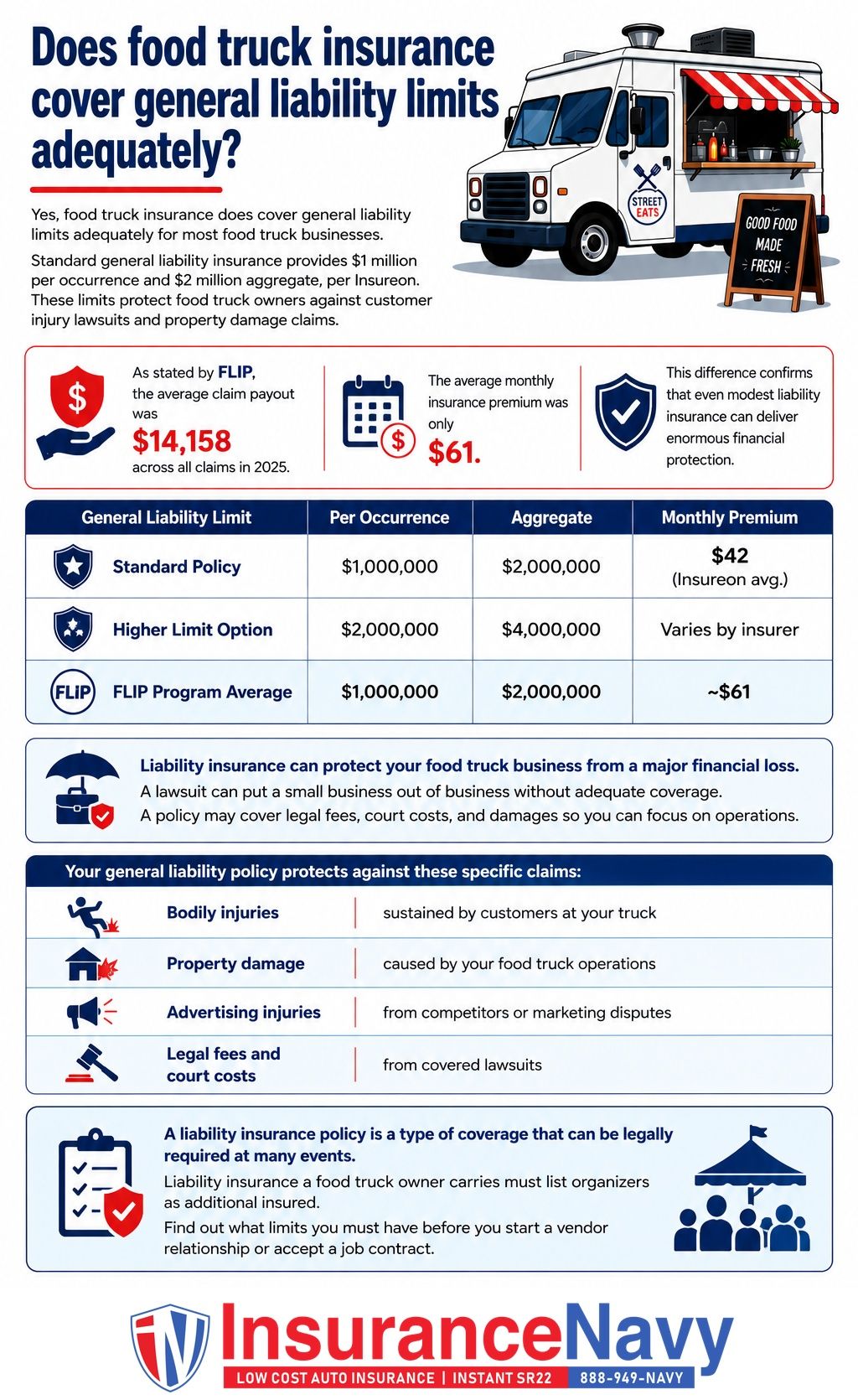
Yes, food truck insurance does cover general liability limits adequately for most food truck businesses. Standard general liability insurance provides $1 million per occurrence and $2 million aggregate, per Insureon. These limits protect food truck owners against customer injury lawsuits and property damage claims.
As stated by FLIP, the average claim payout was $14,158 across all claims in 2025. The average monthly insurance premium was only $61. This difference confirms that even modest liability insurance can deliver enormous financial protection.
| General Liability Limit | Per Occurrence | Aggregate | Monthly Premium |
|---|---|---|---|
| Standard Policy | $1,000,000 | $2,000,000 | $42 (Insureon avg.) |
| Higher Limit Option | $2,000,000 | $4,000,000 | Varies by insurer |
| FLIP Program Average | $1,000,000 | $2,000,000 | ~$61 |
Liability insurance can protect your food truck business from a major financial loss. A lawsuit can put a small business out of business without adequate coverage. A policy may cover legal fees, court costs, and damages so you can focus on operations.
Your general liability policy protects against these specific claims:
Bodily injuries sustained by customers at your truck
Property damage caused by your food truck operations
Advertising injuries from competitors or marketing disputes
Legal fees and court costs from covered lawsuits
A liability insurance policy is a type of coverage that can be legally required at many events. Liability insurance a food truck owner carries must list organizers as additional insured. Find out what limits you must have before you start a vendor relationship or accept a job contract.
How do vendor event requirements affect food truck insurance?
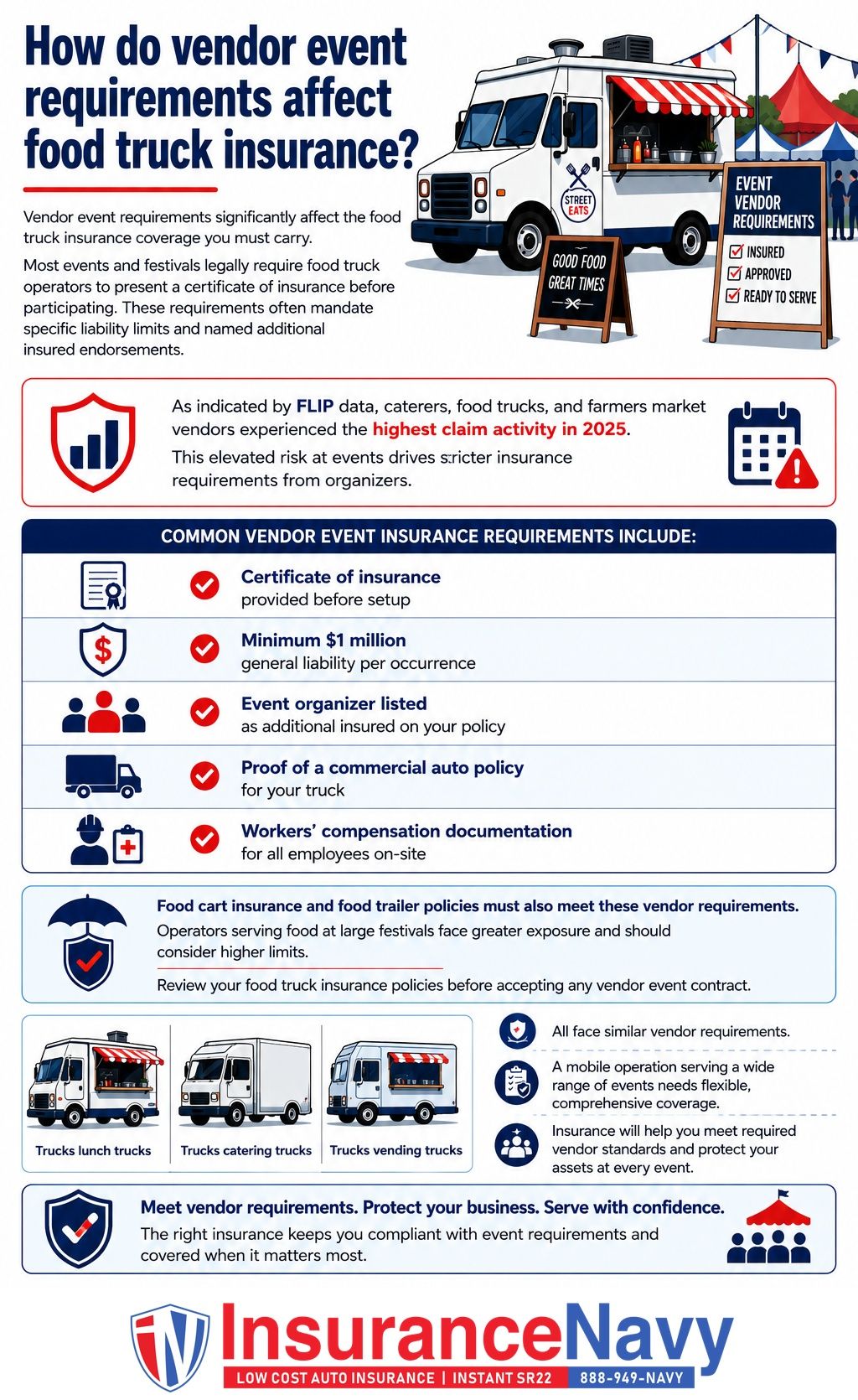
Vendor event requirements significantly affect the food truck insurance coverage you must carry. Most events and festivals legally require food truck operators to present a certificate of insurance before participating. These requirements often mandate specific liability limits and named additional insured endorsements.
As indicated by FLIP data, caterers, food trucks, and farmers market vendors experienced the highest claim activity in 2025. This elevated risk at events drives stricter insurance requirements from organizers. Food truck businesses must ensure their policy meets all event-specific minimums before they can get insured and begin setup.
Common vendor event insurance requirements include:
Certificate of insurance provided before setup
Minimum $1 million general liability per occurrence
Event organizer listed as additional insured on your policy
Proof of a commercial auto policy for your truck
Workers' compensation documentation for all employees on-site
Food cart insurance and food trailer policies must also meet these vendor requirements. Operators serving food at large festivals face greater exposure and should consider higher limits. Review your food truck insurance policies before accepting any vendor event contract.
Trucks lunch trucks, trucks catering trucks, and trucks vending trucks all face similar vendor requirements. A mobile operation serving a wide range of events needs flexible, comprehensive coverage. Insurance will help you meet required vendor standards and protect your assets at every event.
Does food truck insurance include product liability for illness claims?
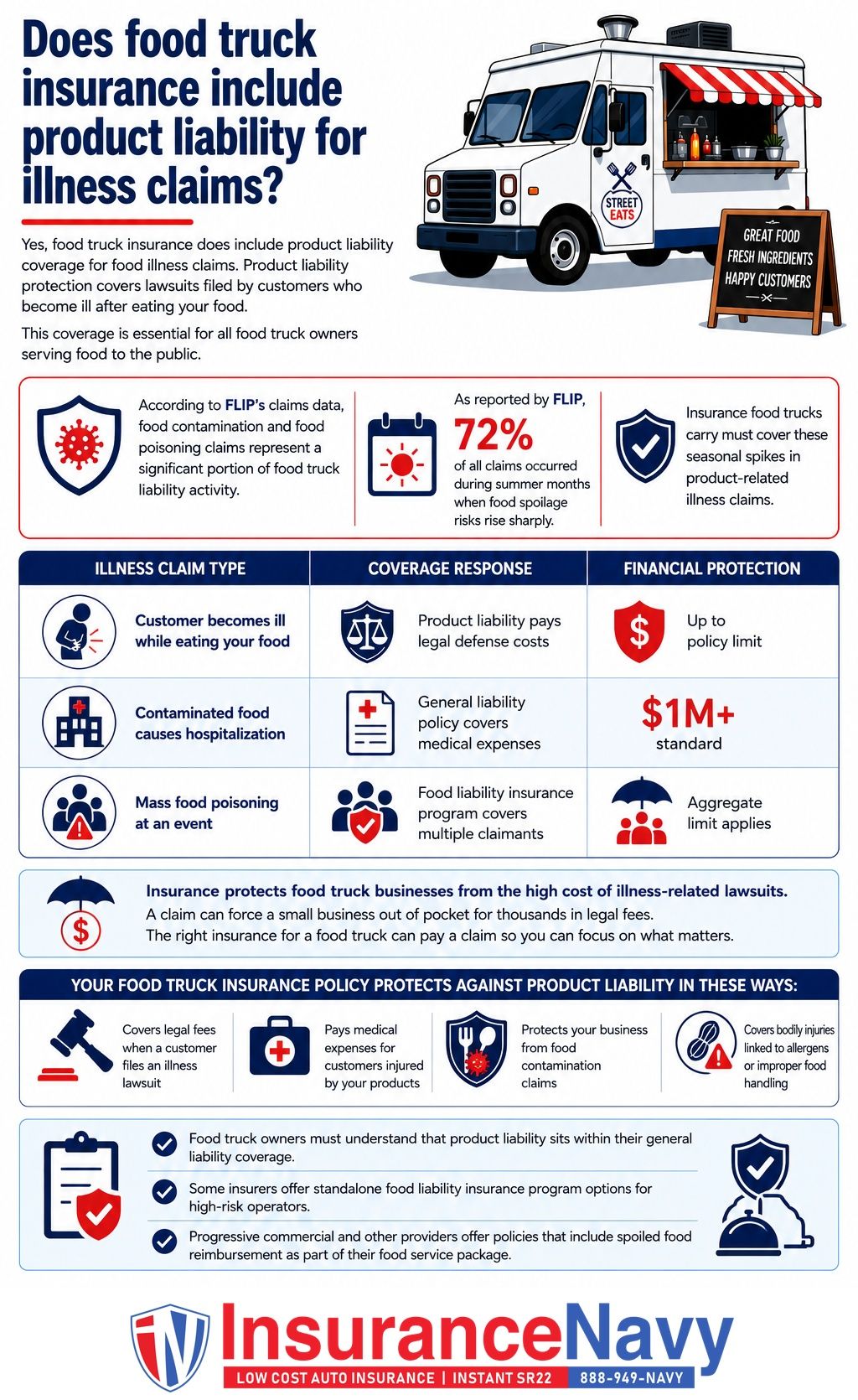
Yes, food truck insurance does include product liability coverage for food illness claims. Product liability protection covers lawsuits filed by customers who become ill after eating your food. This coverage is essential for all food truck owners serving food to the public.
According to FLIP's claims data, food contamination and food poisoning claims represent a significant portion of food truck liability activity. As reported by FLIP, 72% of all claims occurred during summer months when food spoilage risks rise sharply. Insurance food trucks carry must cover these seasonal spikes in product-related illness claims.
| Illness Claim Type | Coverage Response | Financial Protection |
|---|---|---|
| Customer becomes ill while eating your food | Product liability pays legal defense costs | Up to policy limit |
| Contaminated food causes hospitalization | General liability policy covers medical expenses | $1M+ standard |
| Mass food poisoning at an event | Food liability insurance program covers multiple claimants | Aggregate limit applies |
Insurance protects food truck businesses from the high cost of illness-related lawsuits. A claim can force a small business out of pocket for thousands in legal fees. The right insurance for a food truck can pay a claim so you can focus on what matters.
Your food truck insurance policy protects against product liability in these ways:
Covers legal fees when a customer files an illness lawsuit
Pays medical expenses for customers injured by your products
Protects your business from food contamination claims
Covers bodily injuries linked to allergens or improper food handling
Food truck owners must understand that product liability sits within their general liability coverage. Some insurers offer standalone food liability insurance program options for high-risk operators. Progressive commercial and other providers offer policies that include spoiled food reimbursement as part of their food service package.
Why food truck owners need workers' compensation coverage
Workers' compensation insurance is legally required in most states for businesses with employees. Workers' compensation coverage pays medical expenses and lost wages when employees are injured on the job. Food trucks are a high-activity environment where injuries from cooking, lifting, and driving can occur.
Workers' comp insurance provides benefits that protect both your employees and your business. Without workers compensation insurance, a business might face out-of-pocket costs that result in financial ruin. Workers compensation coverage is also required by many event venues and catering contracts.
Key benefits of workers' compensation insurance include:
Covers medical expenses when employees are injured at work
Pays lost wages while injured workers recover
Protects your business from employee lawsuits related to workplace injuries
May be legally required depending on your state and number of employees
Covers injuries from driving, loading, and food service operations
Workers' Compensation insurance will help you create a safer, more compliant business. A commercial food truck with even a few employees must have this coverage in place. Learn more about workers' comp requirements in your state before you purchase a policy.