
Livery Insurance: Costs, Coverage, and Requirements Explained
Without the right insurance, one accident can shut down a livery business for good. Drivers and companies face real financial danger every time they hit the road. Livery insurance keeps vehicles, passengers, and businesses safe from expensive claims. It is a type of commercial auto insurance made for taxis, black car services, limousines, and rideshare vehicles. Knowing how it works helps businesses follow state rules and stay legal. Insurance Navy helps people find the right insurance at a price that works for them. This guide covers what livery drivers and businesses need to know about coverage options, costs, policy limits, and state rules across the USA.
Table of contents
- How Much Does Livery Insurance Coverage Cost?
- What Are the Monthly Premiums for Livery Insurance?
- What Factors Determine Livery Insurance Premium Costs?
- What Is the Deductible of Livery Insurance?
- What Does Livery Insurance Coverage Include?
- What Types of Vehicles Does Livery Insurance Cover?
- Does Livery Insurance Include Liability Protection for Accidents?
- How Does Livery Insurance Handle Passenger Coverage?
- What Are Common Livery Insurance Policy Exclusions?
- What State Requirements Apply to Livery Insurance?
- Do I Need Livery Insurance for My Business?
- Get a Livery Insurance Quote with Insurance Navy Today
How Much Does Livery Insurance Coverage Cost?
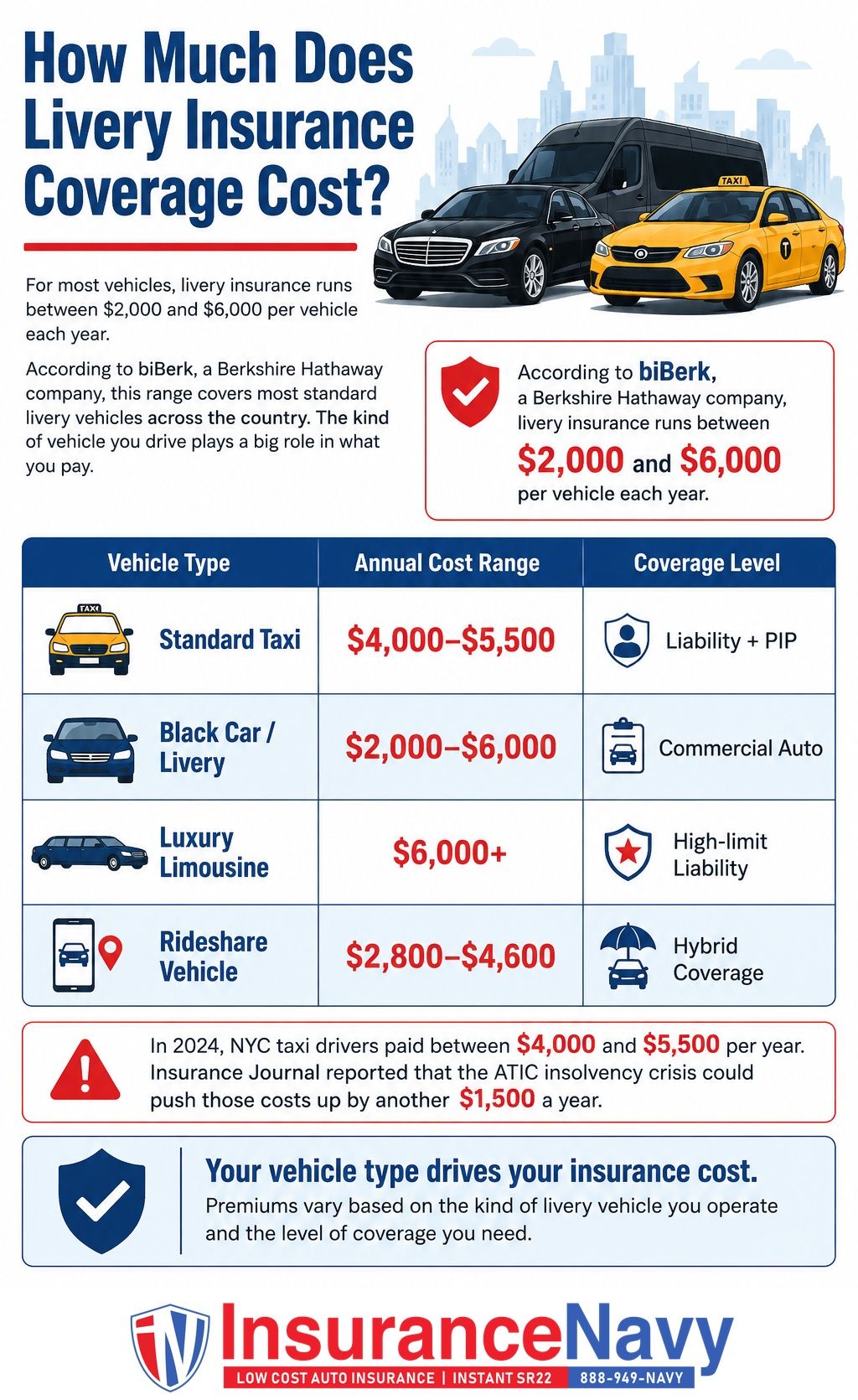
For most vehicles, livery insurance runs between $2,000 and $6,000 per vehicle each year. According to biBerk, a Berkshire Hathaway company, this range covers most standard livery vehicles across the country. The kind of vehicle you drive plays a big role in what you pay.
| Vehicle Type | Annual Cost Range | Coverage Level |
|---|---|---|
| Standard Taxi | $4,000,$5,500 | Liability \+ PIP |
| Black Car / Livery | $2,000,$6,000 | Commercial Auto |
| Luxury Limousine | $6,000+ | High-limit Liability |
| Rideshare Vehicle | $2,800,$4,600 | Hybrid Coverage |
In 2024, NYC taxi drivers paid between $4,000 and $5,500 per year. Insurance Journal reported that the ATIC insolvency crisis could push those costs up by another $1,500 a year.
What Are the Monthly Premiums for Livery Insurance?
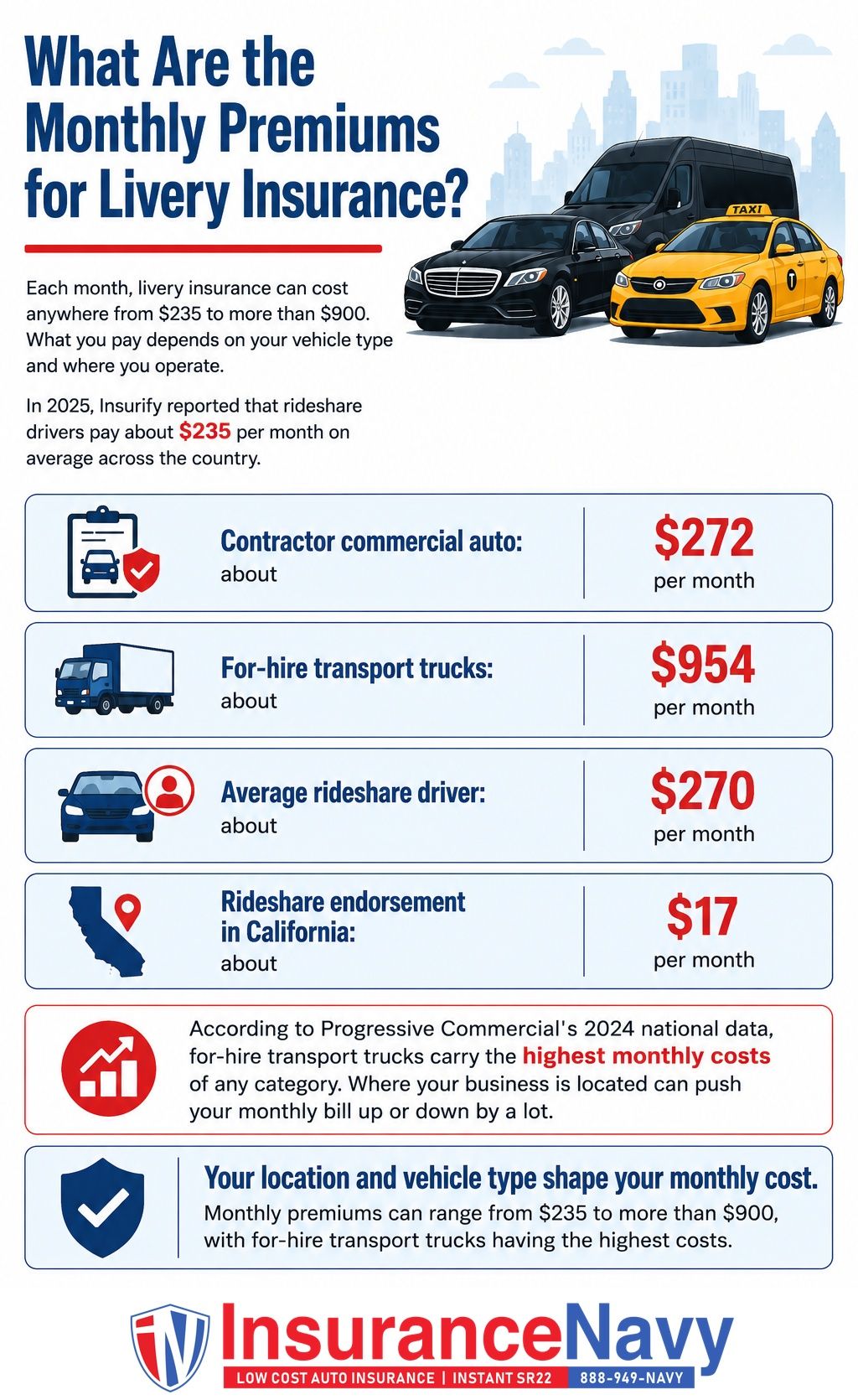
Each month, livery insurance can cost anywhere from $235 to more than $900. What you pay depends on your vehicle type and where you operate. In 2025, Insurify reported that rideshare drivers pay about $235 per month on average across the country.
Contractor commercial auto: about $272 per month
For-hire transport trucks: about $954 per month
Average rideshare driver: about $270 per month
Rideshare endorsement in California: about $17 per month
According to Progressive Commercial's 2024 national data, for-hire transport trucks carry the highest monthly costs of any category. Where your business is located can push your monthly bill up or down by a lot.
What Factors Determine Livery Insurance Premium Costs?
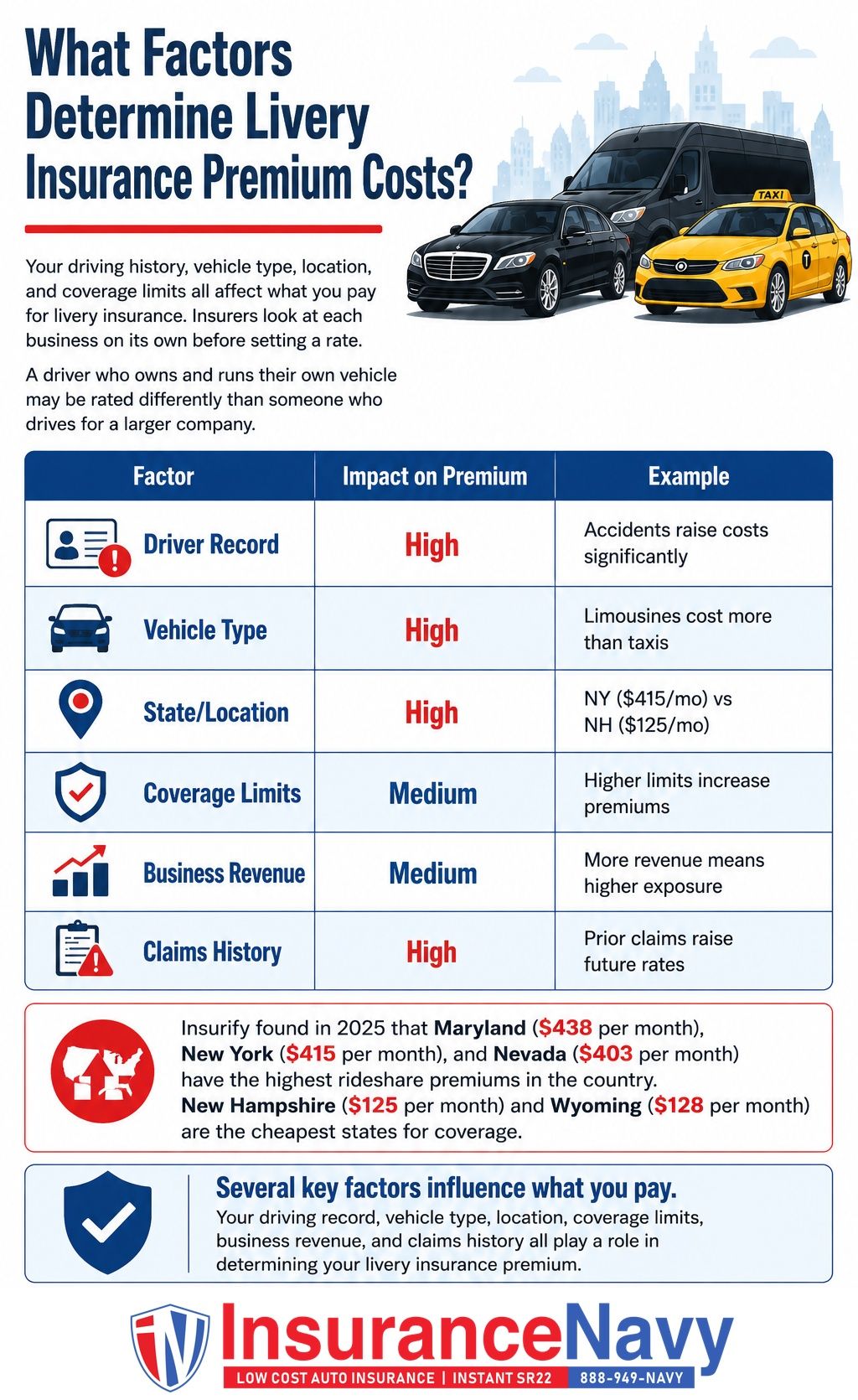
Your driving history, vehicle type, location, and coverage limits all affect what you pay for livery insurance. Insurers look at each business on its own before setting a rate. A driver who owns and runs their own vehicle may be rated differently than someone who drives for a larger company.
| Factor | Impact on Premium | Example |
|---|---|---|
| Driver Record | High | Accidents raise costs significantly |
| Vehicle Type | High | Limousines cost more than taxis |
| State/Location | High | NY ($415/mo) vs NH ($125/mo) |
| Coverage Limits | Medium | Higher limits increase premiums |
| Business Revenue | Medium | More revenue means higher exposure |
| Claims History | High | Prior claims raise future rates |
Insurify found in 2025 that Maryland ($438 per month), New York ($415 per month), and Nevada ($403 per month) have the highest rideshare premiums in the country. New Hampshire ($125 per month) and Wyoming ($128 per month) are the cheapest states for coverage.
What Is the Deductible of Livery Insurance?
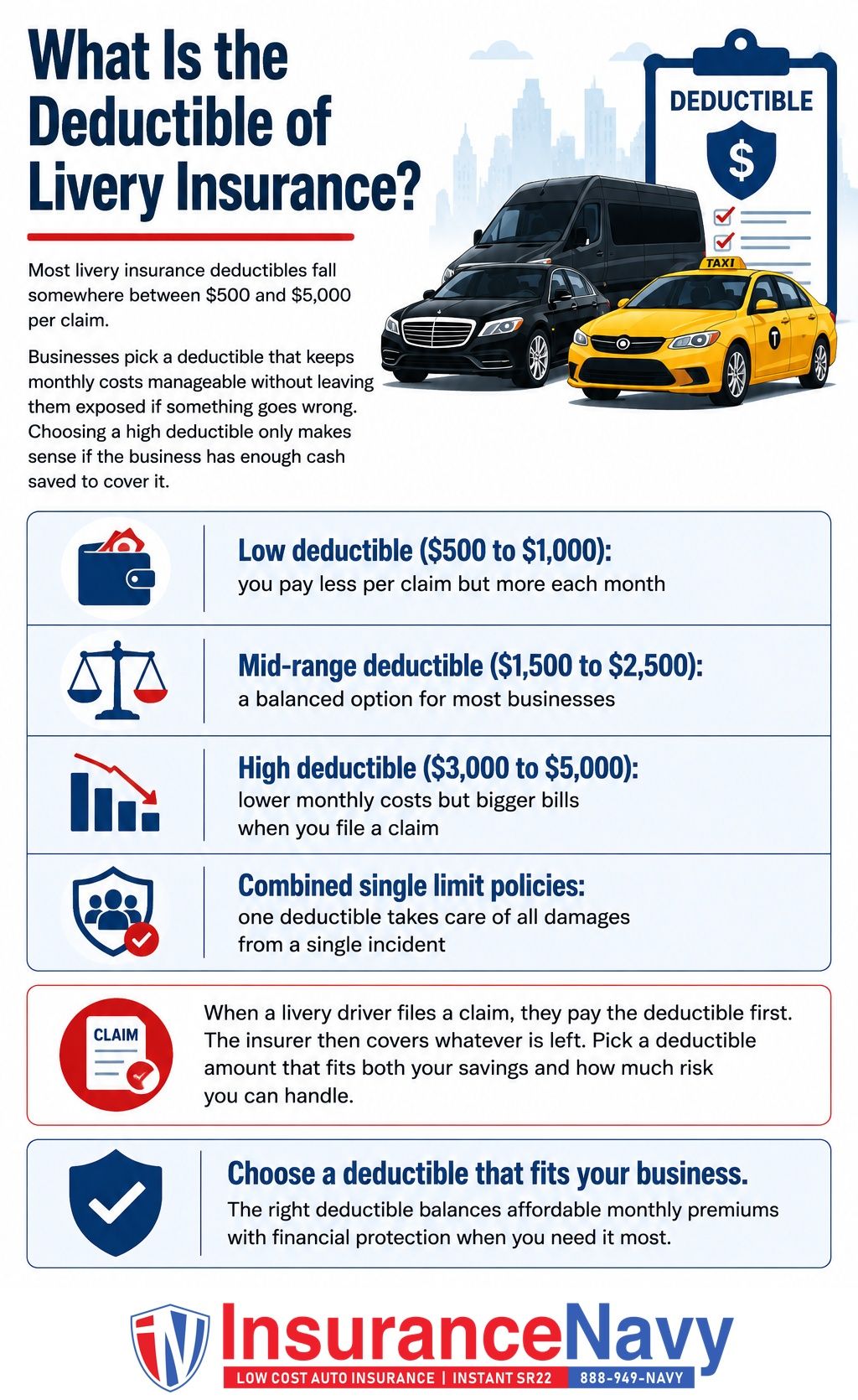
Most livery insurance deductibles fall somewhere between $500 and $5,000 per claim. Businesses pick a deductible that keeps monthly costs manageable without leaving them exposed if something goes wrong. Choosing a high deductible only makes sense if the business has enough cash saved to cover it.
Low deductible ($500 to $1,000): you pay less per claim but more each month
Mid-range deductible ($1,500 to $2,500): a balanced option for most businesses
High deductible ($3,000 to $5,000): lower monthly costs but bigger bills when you file a claim
Combined single limit policies: one deductible takes care of all damages from a single incident
When a livery driver files a claim, they pay the deductible first. The insurer then covers whatever is left. Pick a deductible amount that fits both your savings and how much risk you can handle.
What Does Livery Insurance Coverage Include?
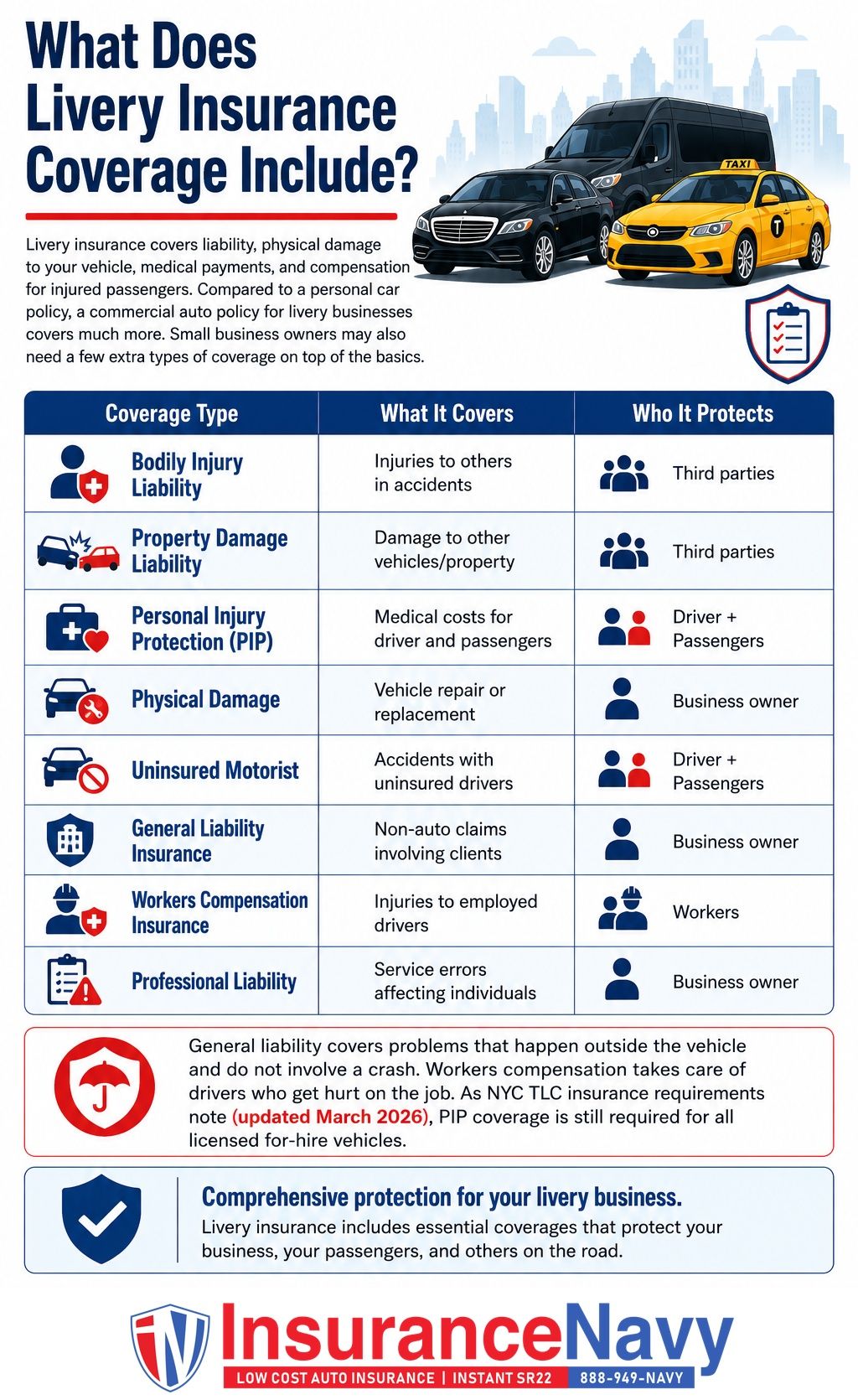
Livery insurance covers liability, physical damage to your vehicle, medical payments, and compensation for injured passengers. Compared to a personal car policy, a commercial auto policy for livery businesses covers much more. Small business owners may also need a few extra types of coverage on top of the basics.
| Coverage Type | What It Covers | Who It Protects |
|---|---|---|
| Bodily Injury Liability | Injuries to others in accidents | Third parties |
| Property Damage Liability | Damage to other vehicles/property | Third parties |
| Personal Injury Protection (PIP) | Medical costs for driver and passengers | Driver \+ Passengers |
| Physical Damage | Vehicle repair or replacement | Business owner |
| Uninsured Motorist | Accidents with uninsured drivers | Driver \+ Passengers |
| General Liability Insurance | Non-auto claims involving clients | Business owner |
| Workers Compensation Insurance | Injuries to employed drivers | Workers |
| Professional Liability | Service errors affecting individuals | Business owner |
General liability covers problems that happen outside the vehicle and do not involve a crash. Workers compensation takes care of drivers who get hurt on the job. As NYC TLC insurance requirements note (updated March 2026), PIP coverage is still required for all licensed for-hire vehicles.
What Types of Vehicles Does Livery Insurance Cover?
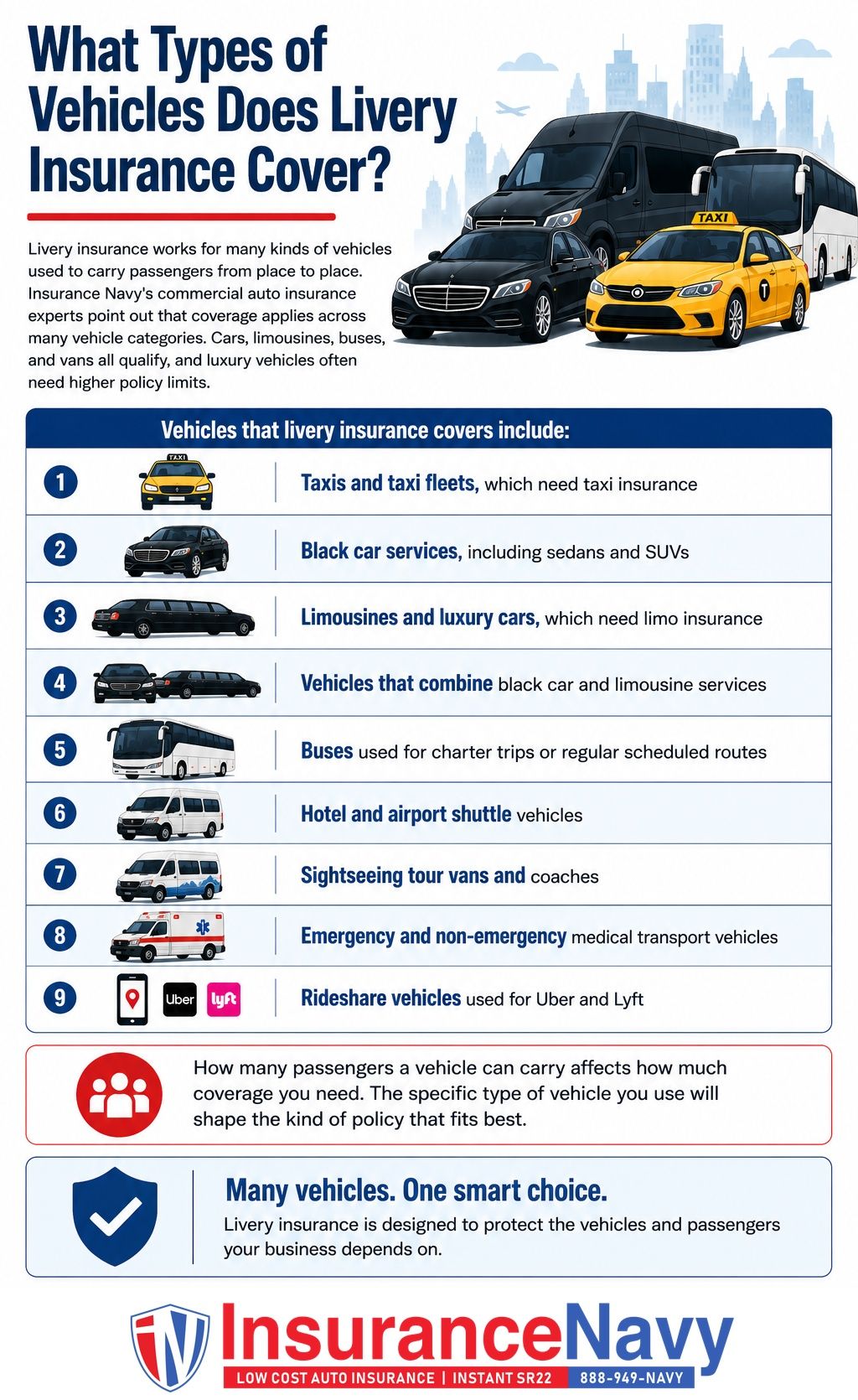
Livery insurance works for many kinds of vehicles used to carry passengers from place to place. Insurance Navy's commercial auto insurance experts point out that coverage applies across many vehicle categories. Cars, limousines, buses, and vans all qualify, and luxury vehicles often need higher policy limits.
Vehicles that livery insurance covers include:
Taxis and taxi fleets, which need taxi insurance
Black car services, including sedans and SUVs
Limousines and luxury cars, which need limo insurance
Vehicles that combine black car and limousine services
Buses used for charter trips or regular scheduled routes
Hotel and airport shuttle vehicles
Sightseeing tour vans and coaches
Emergency and non-emergency medical transport vehicles
Rideshare vehicles used for Uber and Lyft
How many passengers a vehicle can carry affects how much coverage you need. The specific type of vehicle you use will shape the kind of policy that fits best.
Does Livery Insurance Include Liability Protection for Accidents?
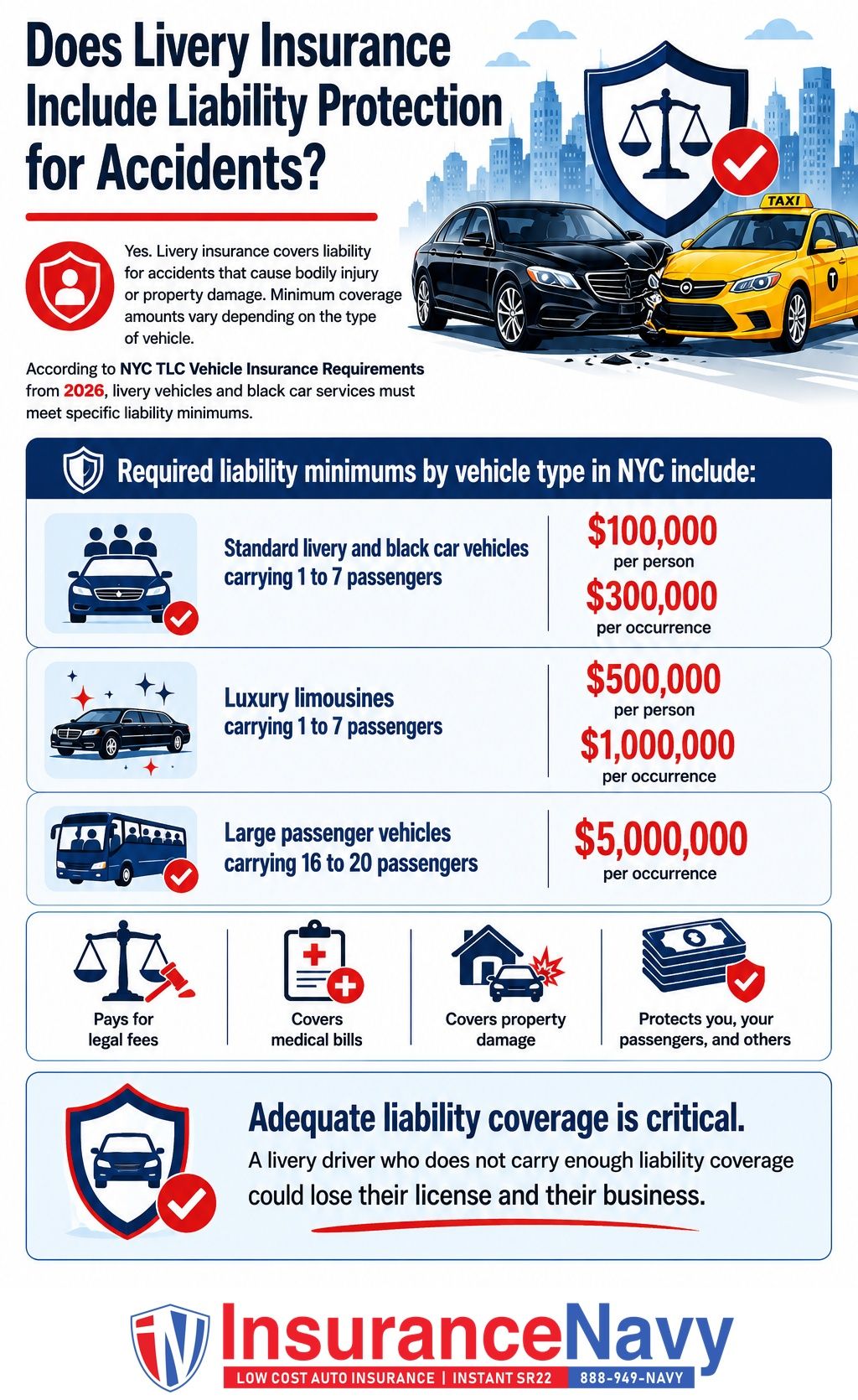
Yes. Livery insurance covers liability for accidents that cause bodily injury or property damage. Minimum coverage amounts vary depending on the type of vehicle. According to NYC TLC Vehicle Insurance Requirements from 2026, livery vehicles and black car services must meet specific liability minimums.
Required liability minimums by vehicle type in NYC include:
Standard livery and black car vehicles carrying 1 to 7 passengers: $100,000 per person and $300,000 per occurrence
Luxury limousines carrying 1 to 7 passengers: $500,000 per person and $1,000,000 per occurrence
Large passenger vehicles carrying 16 to 20 passengers: $5,000,000 per occurrence
Liability insurance pays for legal fees, medical bills, and property damage after an accident. A livery driver who does not carry enough liability coverage could lose their license and their business.
How Does Livery Insurance Handle Passenger Coverage?
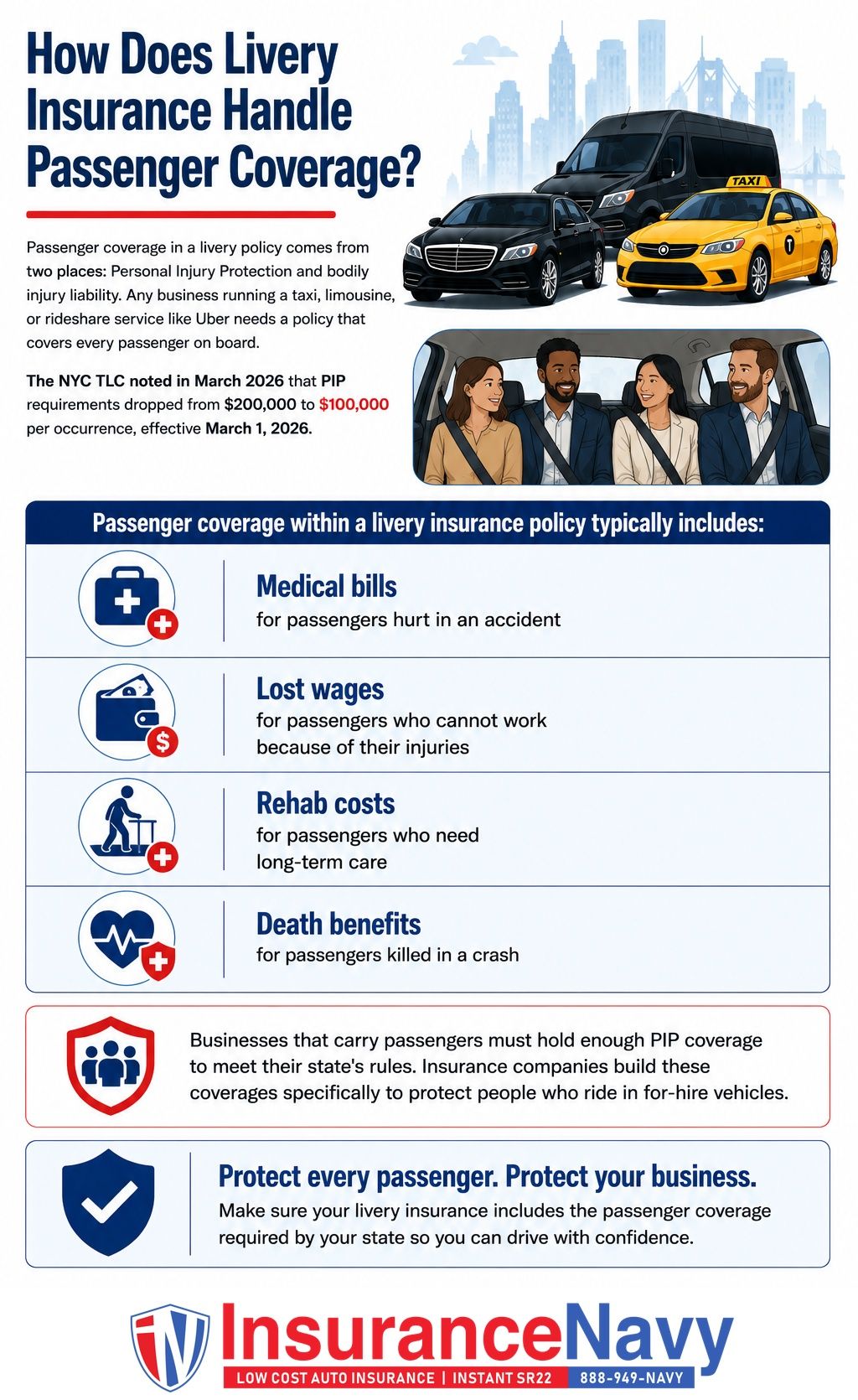
Passenger coverage in a livery policy comes from two places: Personal Injury Protection and bodily injury liability. Any business running a taxi, limousine, or rideshare service like Uber needs a policy that covers every passenger on board. The NYC TLC noted in March 2026 that PIP requirements dropped from $200,000 to $100,000 per occurrence, effective March 1, 2026.
Passenger coverage within a livery insurance policy typically includes:
Medical bills for passengers hurt in an accident
Lost wages for passengers who cannot work because of their injuries
Rehab costs for passengers who need long-term care
Death benefits for passengers killed in a crash
Businesses that carry passengers must hold enough PIP coverage to meet their state's rules. Insurance companies build these coverages specifically to protect people who ride in for-hire vehicles.
What Are Common Livery Insurance Policy Exclusions?
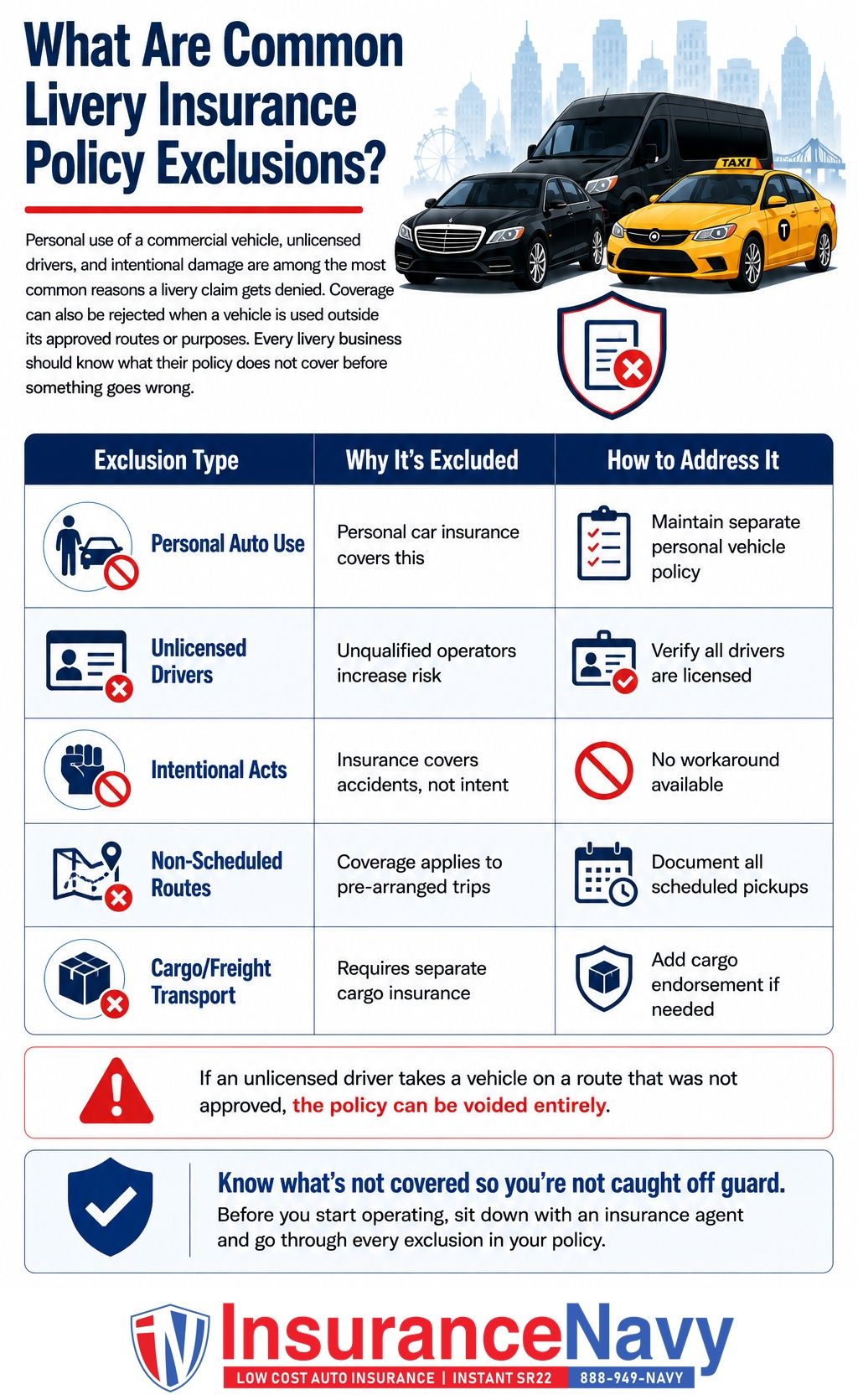
Personal use of a commercial vehicle, unlicensed drivers, and intentional damage are among the most common reasons a livery claim gets denied. Coverage can also be rejected when a vehicle is used outside its approved routes or purposes. Every livery business should know what their policy does not cover before something goes wrong.
| Exclusion Type | Why It's Excluded | How to Address It |
|---|---|---|
| Personal Auto Use | Personal car insurance covers this | Maintain separate personal vehicle policy |
| Unlicensed Drivers | Unqualified operators increase risk | Verify all drivers are licensed |
| Intentional Acts | Insurance covers accidents, not intent | No workaround available |
| Non-Scheduled Routes | Coverage applies to pre-arranged trips | Document all scheduled pickups |
| Cargo/Freight Transport | Requires separate cargo insurance | Add cargo endorsement if needed |
If an unlicensed driver takes a vehicle on a route that was not approved, the policy can be voided entirely. Before you start operating, sit down with an insurance agent and go through every exclusion in your policy.
What State Requirements Apply to Livery Insurance?
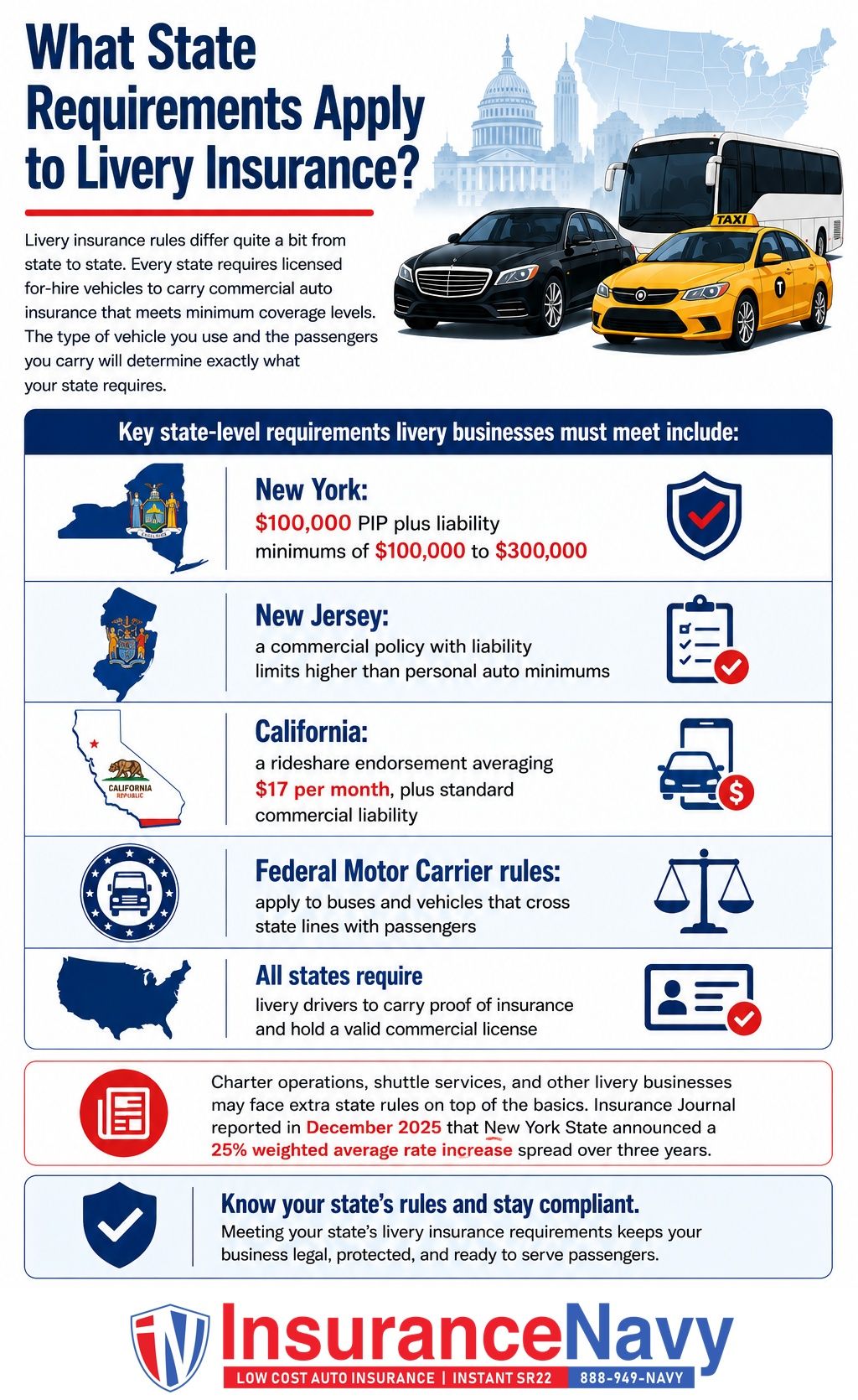
Livery insurance rules differ quite a bit from state to state. Every state requires licensed for-hire vehicles to carry commercial auto insurance that meets minimum coverage levels. The type of vehicle you use and the passengers you carry will determine exactly what your state requires.
Key state-level requirements livery businesses must meet include:
New York: $100,000 PIP plus liability minimums of $100,000 to $300,000
New Jersey: a commercial policy with liability limits higher than personal auto minimums
California: a rideshare endorsement averaging $17 per month, plus standard commercial liability
Federal Motor Carrier rules: apply to buses and vehicles that cross state lines with passengers
All states require livery drivers to carry proof of insurance and hold a valid commercial license
Charter operations, shuttle services, and other livery businesses may face extra state rules on top of the basics. Insurance Journal reported in December 2025 that New York State announced a 25% weighted average rate increase spread over three years.
Do I Need Livery Insurance for My Business?
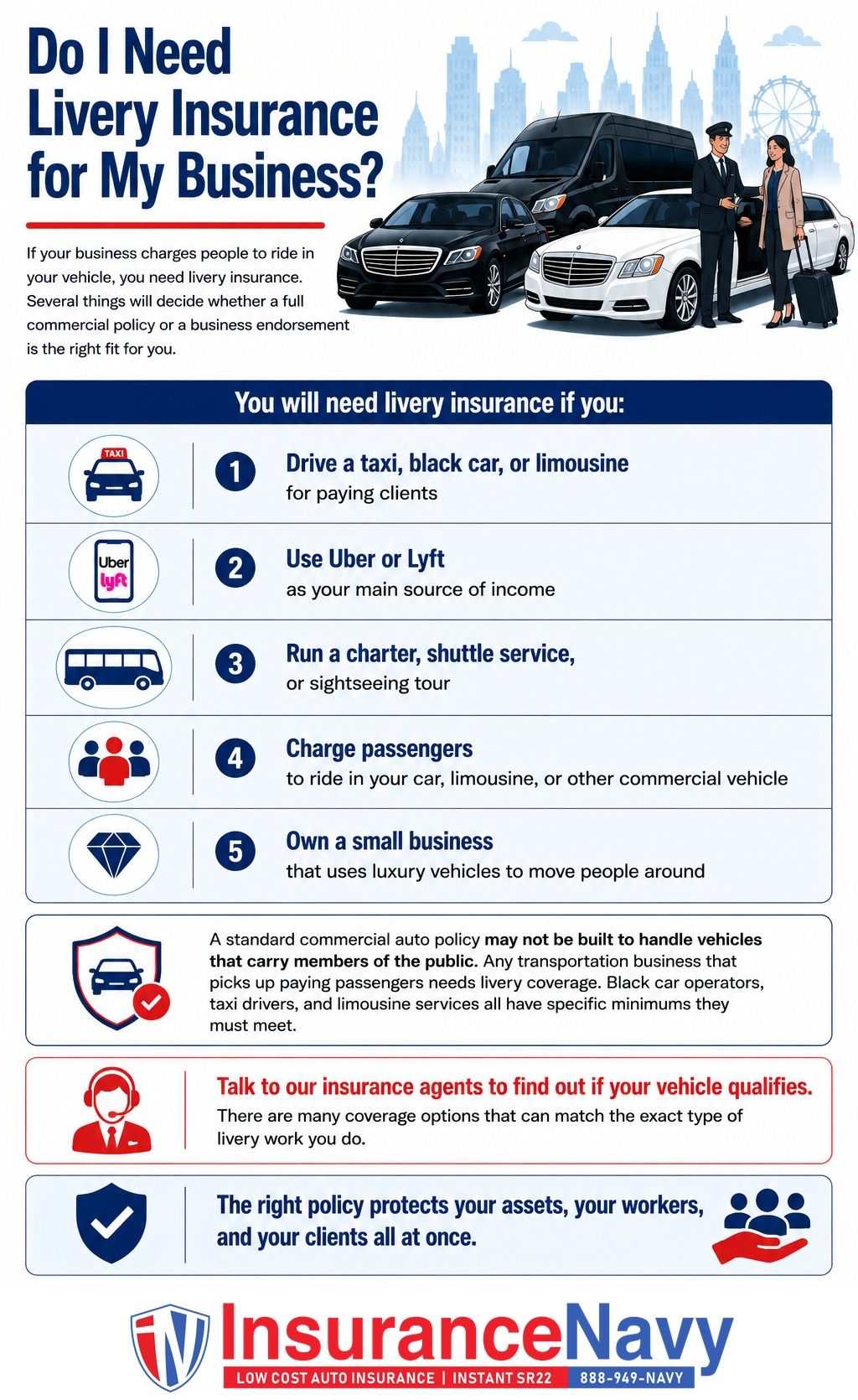
If your business charges people to ride in your vehicle, you need livery insurance. Several things will decide whether a full commercial policy or a business endorsement is the right fit for you.
You will need livery insurance if you:
Drive a taxi, black car, or limousine for paying clients
Use Uber or Lyft as your main source of income
Run a charter, shuttle service, or sightseeing tour
Charge passengers to ride in your car, limousine, or other commercial vehicle
Own a small business that uses luxury vehicles to move people around
A standard commercial auto policy may not be built to handle vehicles that carry members of the public. Any transportation business that picks up paying passengers needs livery coverage. Black car operators, taxi drivers, and limousine services all have specific minimums they must meet.
Talk to our insurance agents to find out if your vehicle qualifies. There are many coverage options that can match the exact type of livery work you do. The right policy protects your assets, your workers, and your clients all at once.
Get a Livery Insurance Quote with Insurance Navy Today
One accident on the road can wipe out a livery business that is not properly covered. Livery insurance protects your drivers, your passengers, your vehicles, and your finances. Whether you run taxis, black car services, limousines, or rideshare vehicles, a solid commercial auto policy is not optional. Insurance Navy helps livery businesses find coverage that meets state rules at a price that makes sense.
Insurance Navy offers livery insurance backed by strong customer service and coverage options built around your business. Get covered today and protect what you have built. Are you a business owner looking for livery insurance? Our agents are ready to help. Fill out a quick form online or call us now to learn more about coverage made for your livery business.